A tour of the island’s water system explored how groundwater, land conservation, infrastructure investment, and seasonal demand shape a dependable drinking water supply.
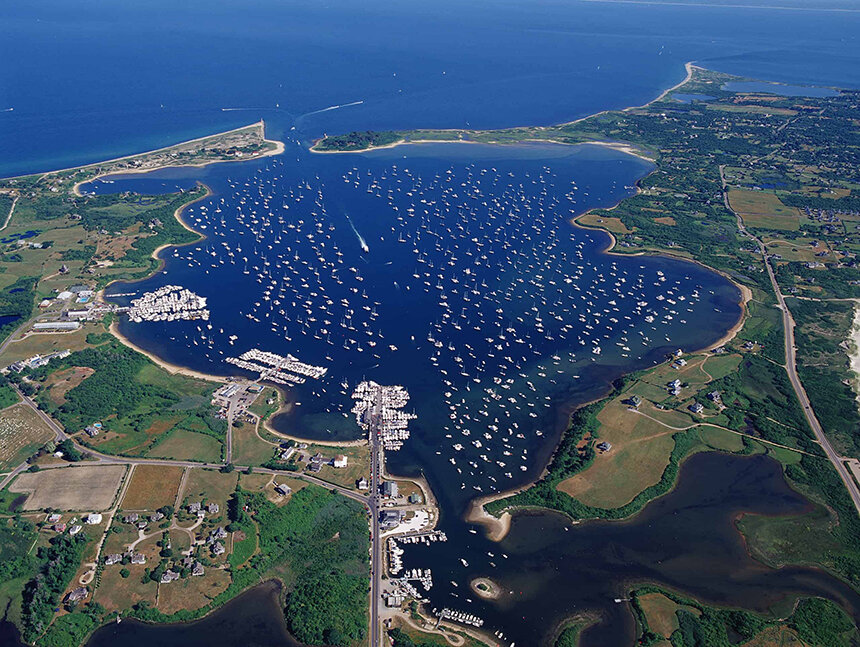
About 1,000 visiting boats are moored in New Harbor on a typical summer weekend. Source ecoRI News.
Like Martha’s Vineyard and Nantucket, Rhode Island’s Block Island draws summer crowds that dwarf its year-round population. About 1,400 people call the island home, but peak summer days can bring as many as 20,000 visitors. That influx creates a challenge for its public water system: maintaining and paying for infrastructure sized for the busiest days.
“The clock ticks fast in the summer out here,” said John Breunig, superintendent of the Block Island Water Company, during a late September tour of the facility. He explained that meeting peak demand leaves little room for equipment failures during the busiest weeks.
Rhode Island Sea Grant organized the tour for members of the Islands Resilience Cohort, with assistance from The Nature Conservancy in Rhode Island. The cohort helps Rhode Island’s resilience leaders in island communities learn from one another as they prepare for coastal change.
Participants learned how the utility shifted from a pond-based supply to treating brackish groundwater, and how land conservation, partnerships, and public investment have helped strengthen the system. The visit also prompted discussion of a broader challenge facing island communities: how to plan for changing needs while protecting the resources they depend on.
From pond water to groundwater
The Block Island Water Company’s treatment plant sits beside Sands Pond, the island’s second-largest freshwater body. In a picturesque setting, it offers a glimpse of the utility’s past, when the pond once supplied its drinking water. Now, the system draws from wells.
During the tour, utility staff described how drought, growing demand, and difficulties treating surface water put pressure on the earlier system. At one point, emergency measures included bringing water from nearby Fresh Pond to supplement the supply.

Block Island Water Company Superintendent John Breunig explains how the plant’s reverse-osmosis system treats groundwater for the island’s public water supply. Photo Kim Ohnemus.
“Block Island started to grow in the ’90s… with tourism and more and more water usage, and this pond just couldn’t sustain through droughts,” said Breunig.
Groundwater offered another option, but it came with its own problems. High concentrations of iron and salt made some well water difficult to treat with the existing equipment.
Reverse osmosis provided a way to use that water. The water company successfully piloted using well water in 1997, followed by a full-scale system that began serving the public in 2001.
The change also suited the plant’s limited footprint. Conventional treatment can require substantial space for water to settle and impurities to be removed. Membrane treatment lets the utility operate within a compact site.
Inside the plant, Breunig explained how the equipment separates water from dissolved salts and minerals, beginning with filters that remove sand and small particles from the well water. Pumps then push the water through semipermeable membranes, leaving behind a concentrated stream of salts and other substances.
Breunig explained that operators then adjust the treated water’s chemistry to reduce pipe corrosion and add chlorine for disinfection before the water enters storage and distribution.
From pond water to groundwater
The system once relied on two production wells, both of which were needed to meet summer demand, Breunig explained. When either needed repairs, operators had to wait for help from the mainland while stored water supplies declined.
“We had no resiliency at all,” he recalled.
Additional wells provide more flexibility. The tour included a visit to a new well field intended to expand the utility’s available sources and reduce dependence on any single well.
Securing those sources required land access. Breunig credited conservation partners, including The Nature Conservancy, with helping identify available property and providing easements needed for well development and protection. State funding for wellhead protection and federal rural water grants and loans also helped make improvements possible, Breunig said. With roughly 350 customer accounts, the utility has a small base over which to spread major infrastructure costs.
Seasonal demand complicates both operations and finances. The Water Company serves the Old Harbor and New Harbor commercial districts, while much of the island relies on private wells. Breunig described customers whose winter water use falls to nearly zero, then rises sharply as rental homes, restaurants, and other businesses fill during summer. The utility must maintain equipment and staffing year-round, with enough capacity to meet peak demand.
Expanding that capacity also raises questions about who it will serve. Breunig said he wants to reserve some for existing homes and businesses whose private wells fail, while allowing room for new development. Otherwise, he cautioned, new demand could consume the added capacity and leave the utility facing similar constraints again.
The afternoon discussion turned to what communities need to tackle these challenges together, from navigating decisions about water access to engaging residents in planning for change. Participants’ experiences and suggestions will help Rhode Island Sea Grant shape the Island Resilience Cohort’s next steps.
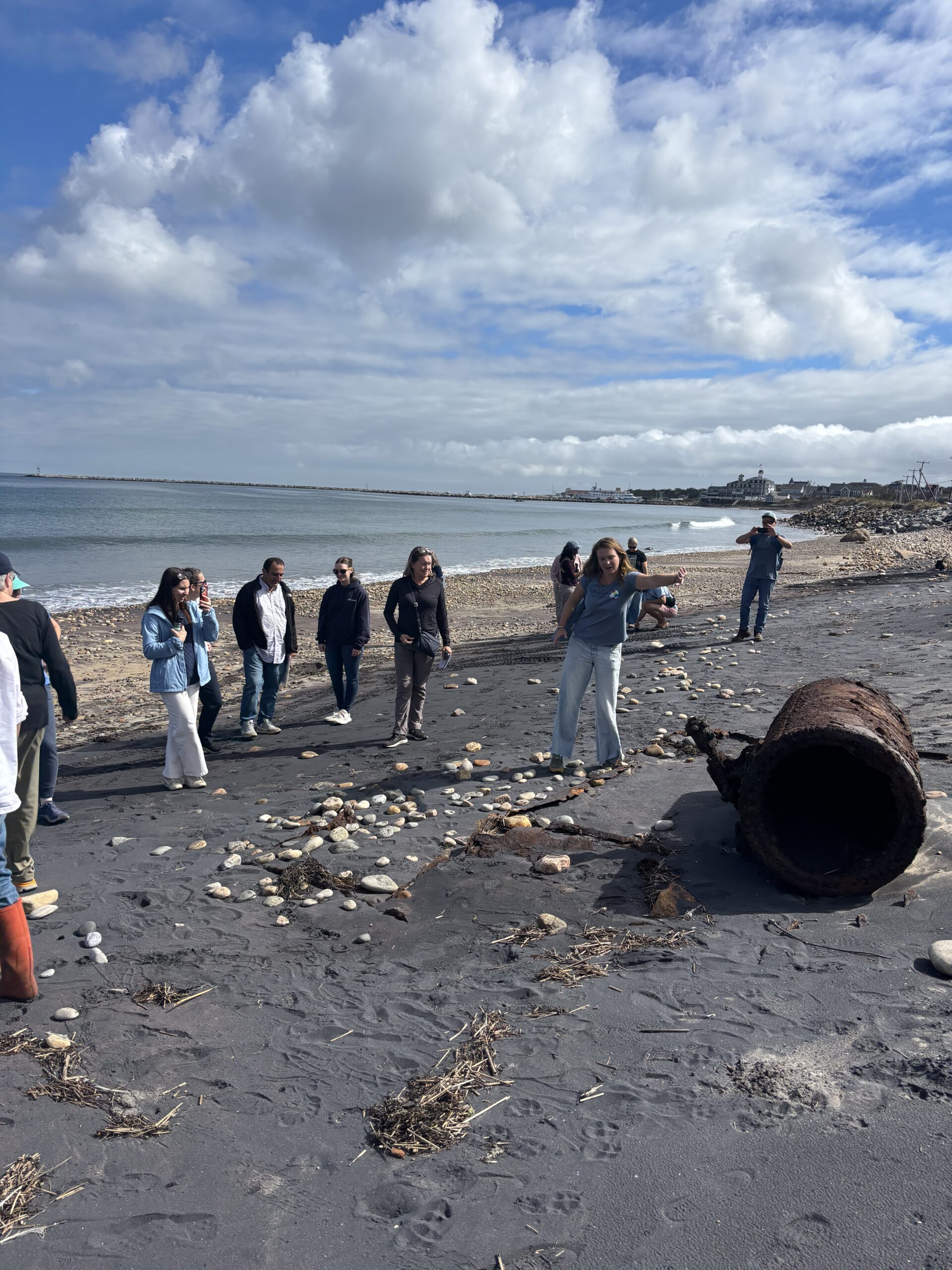
Nora Clark, climate resilience coordinator for The Nature Conservancy in Rhode Island, discusses a mysterious metal structure—possibly a ship’s boiler—exposed by September’s nor’easter. Photo Kim Ohnemus
The Islands Resilience Cohort
The Islands Resilience Cohort brings together municipal leaders, planners, and community organizations from Aquidneck, Conanicut, Block, Prudence, and Hog islands to address shared coastal resilience challenges. Led by Rhode Island Sea Grant, the effort supports peer learning, coordination, and science-informed planning, with funding from the van Beuren Charitable Foundation and the Rhode Island Foundation.
For more information about the Islands Resilience Cohort, contact Rhode Island Sea Grant Coastal Resilience Specialist Casey Tremper at casey_tremper@uri.edu.
– Meredith Haas, Rhode Island Sea Grant