Rhode Island's
Natural Hazards Tools Collaborative
About
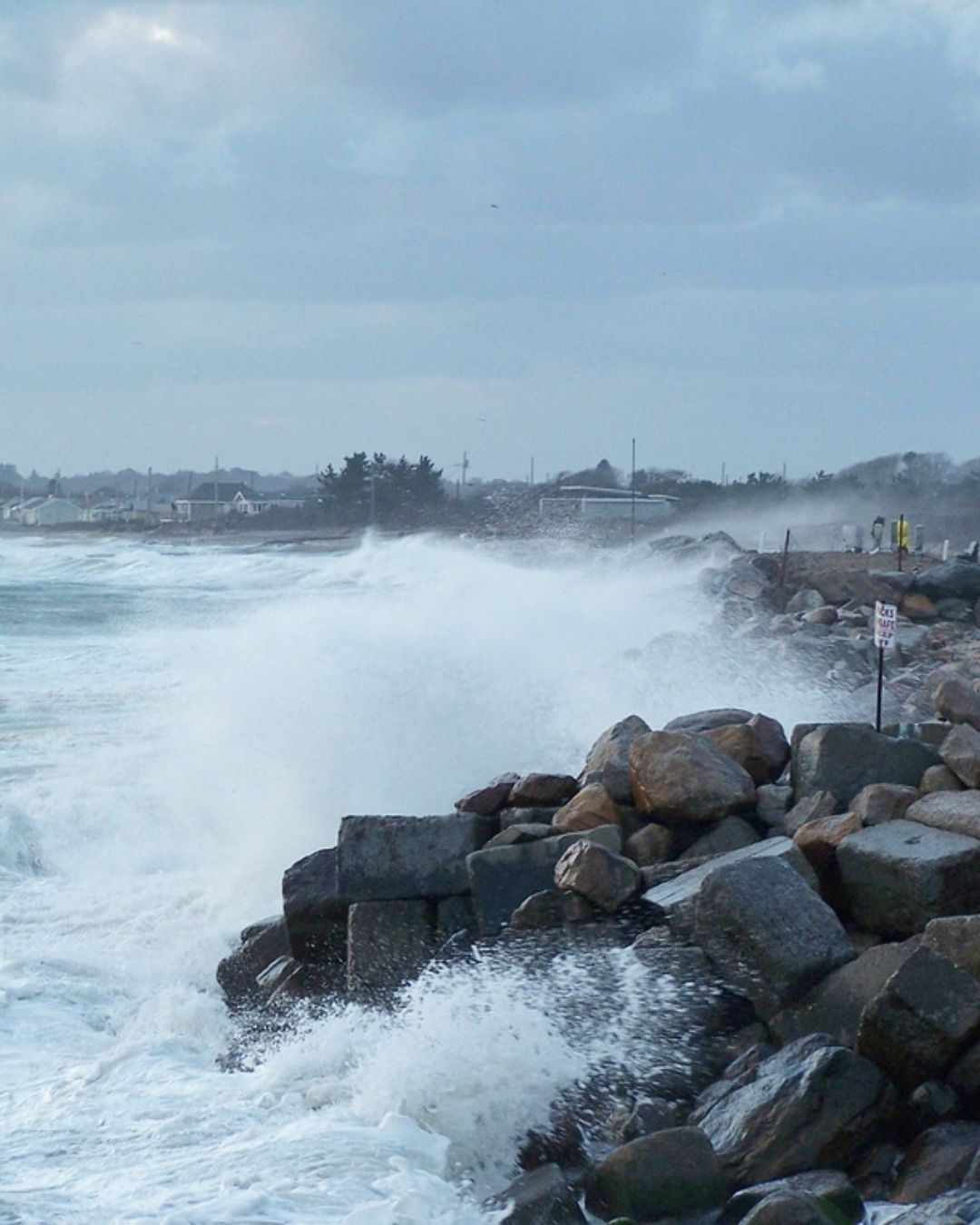
The Rhode Island Natural Hazards Tools Collaborative addresses the growing challenges posed by storms, flooding, and sea-level rise by developing, delivering, and supporting data-driven numerical modeling and technology tools that strengthen community resilience.
With increasing risk to Rhode Island populations during storm and flood events, decision-makers need better information to reduce impacts and prepare for emergency response and recovery.
This partnership between Rhode Island Sea Grant, the University of Rhode Island, and Brown University brings together expertise and resources to support informed decision-making and proactive planning. Through the Collaborative, these institutions work to ensure that science and technology effectively inform policies, planning, and investments that protect communities and infrastructure.


Sea Grant's Coordinating Role
Facilitating Access to Essential Decision-Support Tools
Rhode Island Sea Grant plays a pivotal role in coordinating the Natural Hazards Tools Collaborative. By fostering collaboration among key stakeholders, Sea Grant ensures the tools developed are effectively integrated into planning and emergency response efforts. Our commitment to supporting the use of these tools helps communities across Rhode Island prepare for and respond to natural hazards, enhancing resilience and promoting sustainable development.
Who Benefits from Our Tools
Emergency Managers
Access real-time data, alerts, and predictive insights to strengthen preparedness, response, and recovery efforts.
State Agencies
Inform policies, regulations, and statewide resilience initiatives using comprehensive, science-based risk assessments.
Consultants & Practitioners
Apply advanced modeling, mapping, and data tools to deliver informed, site-specific analyses and solutions for clients.
Urban & Regional Planners
Integrate hazard forecasts and future risk scenarios into land-use planning, infrastructure design, and sustainable development strategies.
Municipalities
Support local decision-making, emergency planning, and resilience investments to better protect communities from natural hazards.
Community Organizations & Residents
Build awareness, preparedness, and engagement through accessible tools and data that illustrate current and future hazard risks.
Emergency Managers
Access real-time data, alerts, and predictive insights to strengthen preparedness, response, and recovery efforts.
Urban & Regional Planners
Integrate hazard forecasts and future risk scenarios into land-use planning, infrastructure design, and sustainable development strategies.
State Agencies
Inform policies, regulations, and statewide resilience initiatives using comprehensive, science-based risk assessments.
Municipalities
Support local decision-making, emergency planning, and resilience investments to better protect communities from natural hazards.
Consultants & Practitioners
Apply advanced modeling, mapping, and data tools to deliver informed, site-specific analyses and solutions for clients.
Community Organizations & Residents
Build awareness, preparedness, and engagement through accessible tools and data that illustrate current and future hazard risks.
Hazard Mitigation Tools
Select a tool or scroll to learn more
RI-CHAMP
Storm simulation and real-time hazard forecasting
RI-Coastal Hazards, Analysis, Modeling, and Prediction (CHAMP) provides early warning alerts to the Rhode Island Emergency Management Agency (RIEMA) and municipal emergency managers, helping predict storm hazards and assess real-time impacts from coastal waves, storm surge, and high winds. The system also runs storm simulations to support future planning by modeling potential impacts to critical infrastructure, including electrical transformers, backup generators, and hazardous materials in port facilities.
Originally developed as a coastal storm tool, RI-CHAMP is now expanding to include inland areas and precipitation-driven flooding. It is also used by the Rhode Island Department of Environmental Management, the Rhode Island Department of Health, and Naval Station Newport.
STORMTOOLS
Flood hazard mapping for planning and permitting
STORMTOOLS is a coastal flood hazard mapping tool that identifies risks from sea-level rise and storm surge. It provides Design Elevation maps that enhance FEMA Base Flood Elevation maps, along with wind hazard maps and a mobile app to assess potential damage to buildings and infrastructure.
Originally developed to support coastal planning and permitting, STORMTOOLS is expanding to incorporate inland flood risk and projected precipitation changes, with additional capabilities currently in development.
Used by more than 10,000 state agencies, municipal planners, consultants, and residents each year, STORMTOOLS supports infrastructure planning and resilience decision-making statewide. It is embedded in the Rhode Island Coastal Resources Management Council’s coastal hazard permitting system and has informed major infrastructure decisions, including the elevation of the Providence River Pedestrian Bridge.
RI-CHAMP
Storm simulation and real-time hazard forecasting
RI-Coastal Hazards, Analysis, Modeling, and Prediction (CHAMP) provides early warning alerts to the Rhode Island Emergency Management Agency (RIEMA) and municipal emergency managers, helping predict storm hazards and assess real-time impacts from coastal waves, storm surge, and high winds. The system also runs storm simulations to support future planning by modeling potential impacts to critical infrastructure, including electrical transformers, backup generators, and hazardous materials in port facilities.
Originally developed as a coastal storm tool, RI-CHAMP is now expanding to include inland areas and precipitation-driven flooding. It is also used by the Rhode Island Department of Environmental Management, the Rhode Island Department of Health, and Naval Station Newport.
STORMTOOLS
Flood hazard mapping for planning and permitting
STORMTOOLS is a coastal flood hazard mapping tool that identifies risks from sea-level rise and storm surge. It provides Design Elevation maps that enhance FEMA Base Flood Elevation maps, along with wind hazard maps and a mobile app to assess potential damage to buildings and infrastructure.
Originally developed to support coastal planning and permitting, STORMTOOLS is expanding to incorporate inland flood risk and projected precipitation changes, with additional capabilities currently in development.
Used by more than 10,000 state agencies, municipal planners, consultants, and residents each year, STORMTOOLS supports infrastructure planning and resilience decision-making statewide. It is embedded in the Rhode Island Coastal Resources Management Council’s coastal hazard permitting system and has informed major infrastructure decisions, including the elevation of the Providence River Pedestrian Bridge.
MyCoast: RI
Community-powered flood reporting and documentation
MyCoast: Rhode Island collects crowdsourced photos of flooding, erosion, and king tides across the state, helping document current conditions and illustrate how storm activity and sea-level rise are affecting communities.
Agencies, businesses, practitioners, and residents use MyCoast reports to track changing flood patterns, validate models, and inform local decision-making.
The platform includes CoastSnap, a community science initiative that documents shoreline change over time through fixed-location photography, and an updated Storm Reporter tool that enables expanded reporting of inland flooding impacts.
NEST
Real-time environmental monitoring network
NEST is a statewide network of sensors that monitor environmental conditions affecting communities across Rhode Island. The sensor suite includes flood-management sensors, air-quality monitors, and meteorological instruments that measure temperature, humidity, wind, and water levels in real time.
The public dashboard provides access to data from NEST and other real-time sensor networks across the state. Brown University is developing additional features, including expanded alert capabilities.

MyCoast: RI
Community-powered flood reporting and documentation
MyCoast: Rhode Island collects crowdsourced photos of flooding, erosion, and king tides across the state, helping document current conditions and illustrate how storm activity and sea-level rise are affecting communities.
Agencies, businesses, practitioners, and residents use MyCoast reports to track changing flood patterns, validate models, and inform local decision-making.
The platform includes CoastSnap, a community science initiative that documents shoreline change over time through fixed-location photography, and an updated Storm Reporter tool that enables expanded reporting of inland flooding impacts.
NEST
Real-time environmental monitoring network
NEST is a statewide network of sensors that monitor environmental conditions affecting communities across Rhode Island. The sensor suite includes flood management sensors, air quality monitors, and meteorological instruments that measure temperature, heat, wind, and water levels in real time.
The public dashboard provides access to data from NEST and other real-time sensor networks across the state. Brown University is developing additional features, including expanded alert capabilities.