
Once a factory for American Tourister Luggage, the Tourister Mill in Warren was notorious for tidal flooding. Today, the mill building has been converted into apartments and businesses. This transformation is more than cosmetic, incorporating stormwater management, coastal resilience, and shoreline access into its rebirth.
On a walking tour of Warren in November, walk leaders discussed how Tourister Mill illustrates how developers can integrate coastal access and environmental safeguards in redevelopment projects through the Rhode Island Coastal Resources Management Council’s (CRMC) Urban Coastal Greenway regulations.
Leah Feldman, coastal policy analyst for the CRMC, told participants that urban coastal greenway guidelines ensure that public access is maintained to the highest degree possible during redevelopment.

This 1896 mill building was home to American Tourister for many years before being renovated into apartments and commercial space a decade ago.
Janet Freedman, retired coastal geologist with CRMC and senior fellow at the University of Rhode Island Coastal Institute, explained the Urban Coastal Greenway guidelines: redevelopment requires a buffer zone between buildings and the water, its size dictated by lot dimensions.
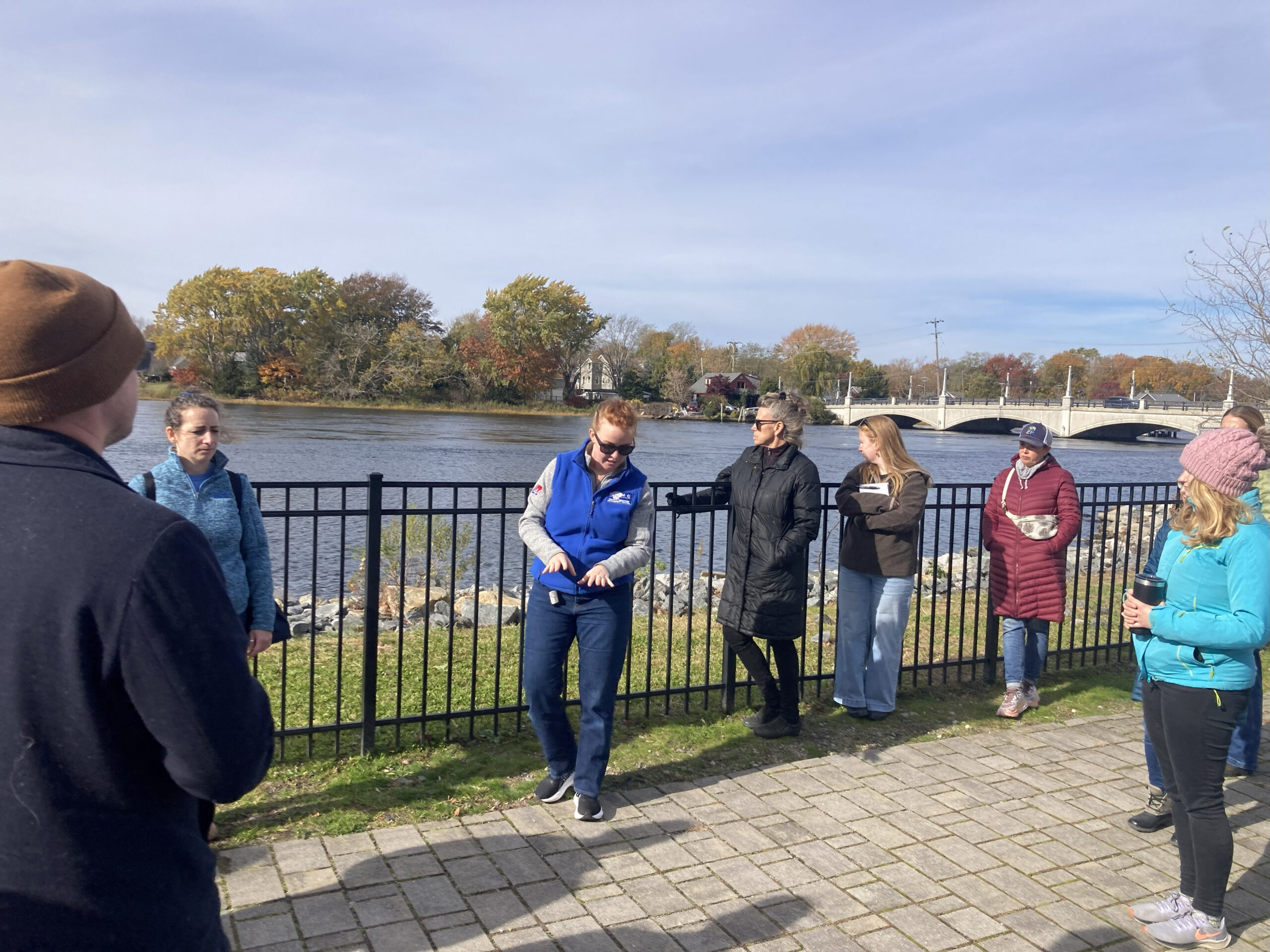
CRMC Coastal Geologist Emily Hall points to pervious pavers that line the walkways of the Tourister Mill urban coastal greenway. Pervious pavers allow water to seep through the gaps rather than pool on an impervious surface, such as pavement. Photo by Sophia Milman
Here, the developers used the coastal greenway designation to limit the buffer without cutting off public access. Additionally, these projects require that 100% of stormwater treatment systems be on site, paid for and maintained by the developer. The result is a landscape that feels both historic and forward-looking: a mill reborn and a shoreline reimagined, in a project that weaves together resilience and access.
After stopping at Tourister Mill, the walking tour continued down Water Street to Baker’s Wharf. Baker’s Wharf is a CRMC-designated right of way, a permanent protected place to reach the shore. Feldman explains that this right of way is unmarked, without any signs to guide visitors.
“This past summer, the Coastal Resources Management Council, along with Save The Bay, went to 14 DPWs—Departments of Public Works—to deliver signposts and signs so that these missing signs can be installed,” Feldman said. While the Warren sign was not yet posted, “We are still working diligently with the towns to ensure these signs are installed and that these rights of way are maintained as clear and open areas for the public in perpetuity,” Feldman added.
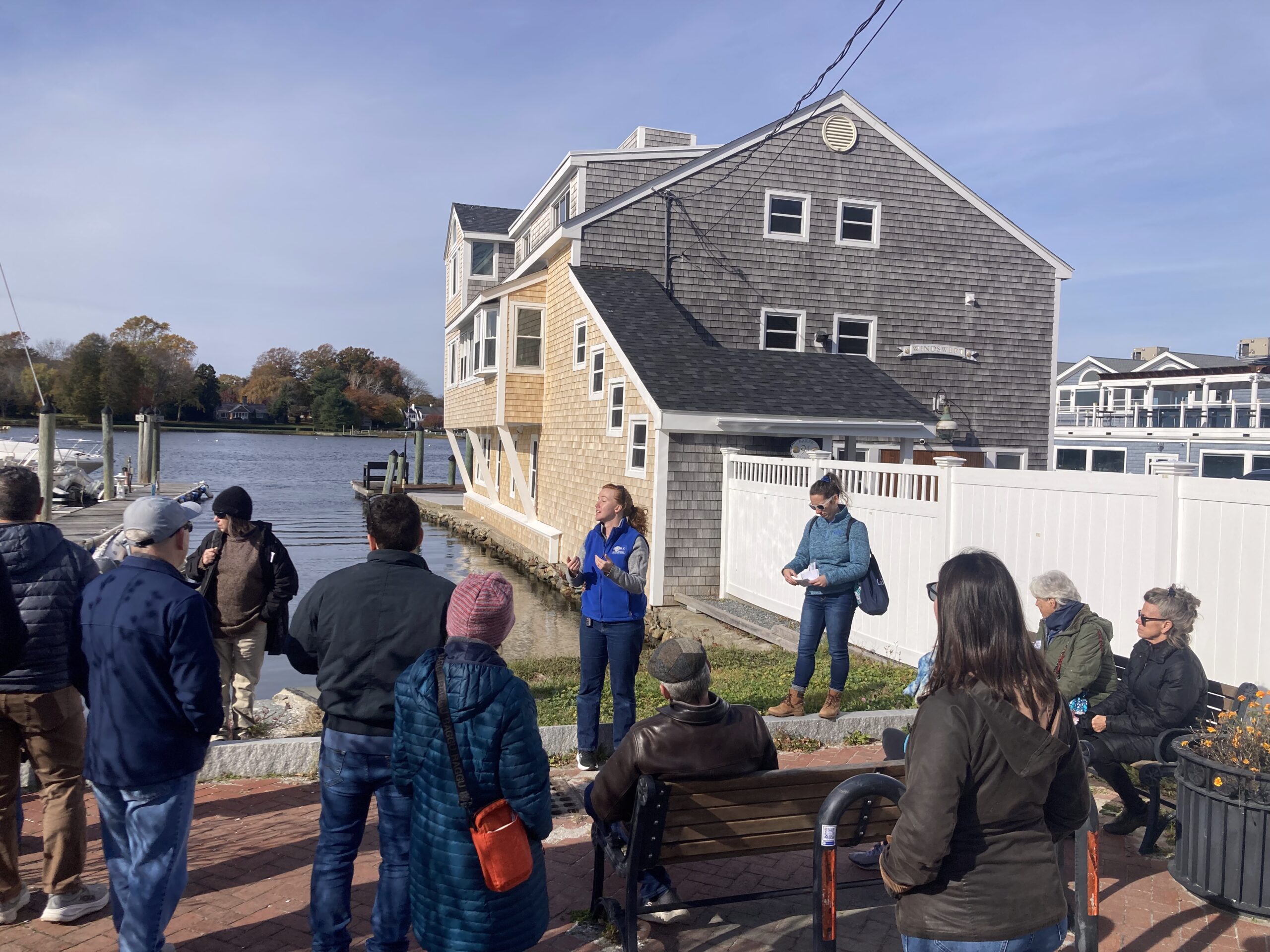
Hall explains the fragility of public access at Baker’s Wharf: perpendicular rights of way ensure people can reach the water, but lateral access along the shore, a right provided by the Rhode Island Constitution, is increasingly threatened by sea level rise. Hall highlights that at high tide, the beach is inaccessible at this right of way. Photo by Sophia Milman
Her comments highlight the complexity of shoreline access. While CRMC designates and provides signage for more than 200 rights of way to the shore in cities and towns around the coast, ownership lies with other entities, including municipalities and private owners, meaning maintenance requires permission and funding from multiple sources.
Warren’s waterfront, one of the lowest lying in the state, demonstrates the importance of addressing coastal resilience for protecting homes, businesses, and the shoreline access that defines Rhode Island’s identity as the Ocean State.
This walk was part of community engagement on shoreline access and Warren resilience efforts, particularly an NSF-funded project led by URI Professor Emi Uchida with outreach support provided by Rhode Island Sea Grant’s Eliza Berry.
Related Links:
- CRMC Urban Coastal Greenway program design manual
- Warren Conservation Commission map showing the properties the commission stewards and rights of way Warren Open Space
- Warren Conservation Commission Website
Other stories about the Warren walk:
—by Sophia Milman, Rhode Island Sea Grant Communications Intern