Rhode Island Sea Grant Law Fellow Emily Bredin explores ways to protect waterfront access for the state’s commercial fishing and aquaculture industries.
Rhode Island’s coastline has long supported a thriving seafood industry, from commercial fishing vessels returning to port with fresh catches to oyster farmers transporting shellfish from their farms. But commercial fishers and aquaculture farmers are facing increasing challenges finding affordable places to operate.
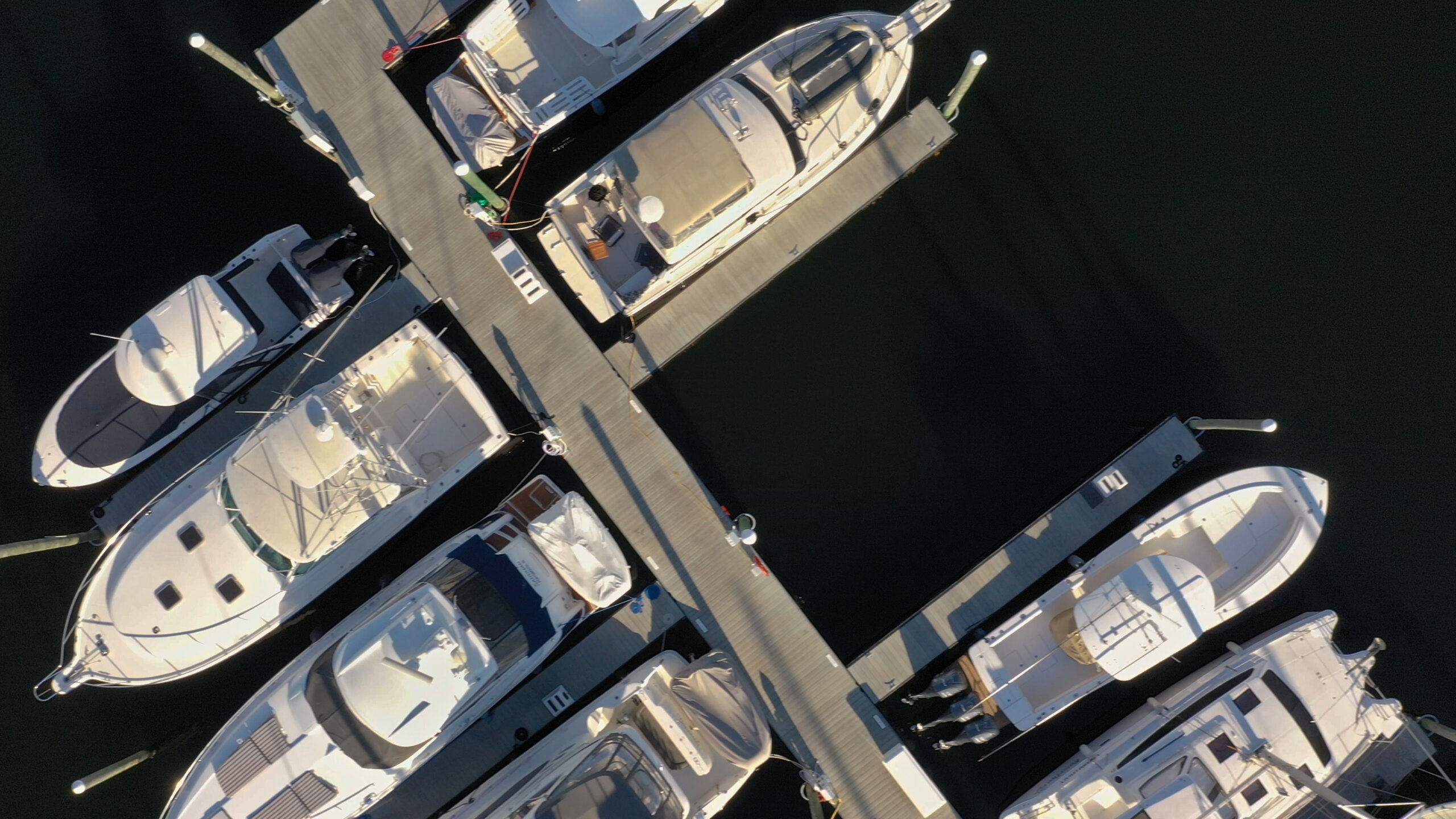
Over time, competition with recreational boating has driven up the cost of dock space for commercial seafood operators.
The Importance of Working Waterfronts
Working waterfronts are coastal areas that provide access to navigable waters for commercial activities. They include access points such as docks, marinas, boat ramps, and moorings that allow fishers and aquaculture farmers to transport products, maintain vessels, and operate their businesses.
Beyond water access, commercial seafood operators need facilities such as fuel stations, electricity, bathrooms, and equipment storage. The Port of Galilee in Narragansett is one example of a working waterfront that provides essential infrastructure for Rhode Island’s fishing industry.
As private marinas expand and recreational boating becomes more popular, commercial operators must compete for limited waterfront space. Private marinas may often charge recreational boaters more than the commercial industry can afford, creating financial incentives to prioritize recreational vessels. Emily Bredin, a recent Rhode Island Sea Grant Law Fellow, highlighted this difference during her presentation of her legal research findings, comparing docking costs at the Port of Galilee with private marinas.

Three oyster farmers purchased Ninigret Landing Marina in 2015, and it continues to support both shellfish farming and recreational boating.
“The Port of Galilee will charge around $40 per foot per year, whereas a private marina can charge upwards of $145 per foot per season,”
Exploring Legal and Policy Opportunities
Bredin’s research examined the legal framework governing Rhode Island’s waterfronts, including state laws and regulations, municipal zoning ordinances, and harbor management plans.
The Rhode Island Coastal Resources Management Council (CRMC) and Department of Environmental Management (RIDEM) both play important roles in managing coastal resources. Individual municipalities also establish their own regulations.
Her research identified more than 10 potential opportunities for preserving or expanding working waterfront access, organized into three main areas: property acquisition and funding, planning and zoning, and waterfront operations.
One possibility involves creating financial incentives for private marina owners who reserve dock space for commercial seafood vessels. Another involves expanding publicly owned waterfront property to provide more affordable and reliable access.
The report also considers changes to municipal harbor management plans and zoning ordinances to better account for the needs of commercial fishers and aquaculture farmers.
Bredin also examined ways to improve existing waterfront space, including changes to how Rhode Island’s Derelict and Abandoned Vessel Removal Commission prioritizes vessel removal. One proposed change would prioritize derelict “vessels within working waterfront areas [to] be removed first, so that commercial seafood operators can then use that space,” Bredin explained.
This approach could free up valuable dock and mooring space for commercial seafood operators without requiring additional waterfront development.
Protecting the Future of Rhode Island's Seafood Industry
The project brought together organizations involved in Rhode Island’s coastal and seafood industries, including CRMC, RIDEM, the Commercial Fisheries Research Foundation, the Ocean State Aquaculture Association, and Rhode Island Sea Grant.
Through the Law Fellow Program, Bredin worked with Marine Affairs Institute staff and these partners to evaluate existing laws and identify potential changes that could help preserve waterfront access.
“Our conclusion of the project was really that there are a lot of opportunities, and something really cool about it is that there might be movement with those activities,” Bredin said.
Interested in reading the report?
Click below to read Emily Bredin’s Marine Affairs report!
– Isabella Carmichael, Rhode Island Sea Grant