Every time someone buys seafood, they make a decision that reaches far beyond the dinner table. That purchase can influence what fishermen catch, how seafood is harvested, and even the labor conditions behind products sold around the world.
For University of Rhode Island Ph.D. candidate Aida Pauls, those everyday decisions are at the heart of her research. As one of just five fellows selected this year for the highly competitive NOAA National Marine Fisheries Service–Sea Grant Joint Fellowship in Marine Resource Economics, Pauls is exploring how consumer choices can create healthier oceans, stronger local fisheries, and more ethical seafood supply chains.

The fellowship supports graduate students conducting research focused on marine resource economics. At the University of Rhode Island, Pauls is advised by Professor Hirotsugu Uchida, while her NOAA faculty advisor is Kristy Wallmo. Together, her advisors provide guidance from both the academic and federal sides of her research, helping her connect economic research with the needs of fisheries management and policy.
Uchida said one of the things that stands out most about Pauls is her ability to identify questions she wants to pursue and take the initiative to investigate them.
“Even when it looked a little bit skeptical at the outset, she successfully proved that this could actually be done.” Uchida said. “Among the students I’ve worked with, she’s really at the top… she does so much on her own.”
That independent approach is reflected in Pauls’ own view of the seafood industry.
“I think oftentimes consumers don’t know the power that they have,” Pauls said.
That belief has shaped her research, which asks a simple but powerful question: can informed consumers help create a more sustainable seafood industry?
Her work examines two different challenges facing fisheries today. The first focuses on ikejime, a traditional Japanese harvesting method designed to reduce stress in fish during harvest. The technique results in higher-quality seafood with improved flavor and a longer shelf life.
Because the method requires fish to be alive when they are harvested, it is best suited for smaller-scale rod-and-reel and pot fisheries rather than most large commercial operations. For small-scale fishermen, it can also increase the value of their catch.
Pauls’ research explores whether greater consumer awareness could create new market opportunities for smaller-scale fishermen by increasing demand for higher-quality seafood.
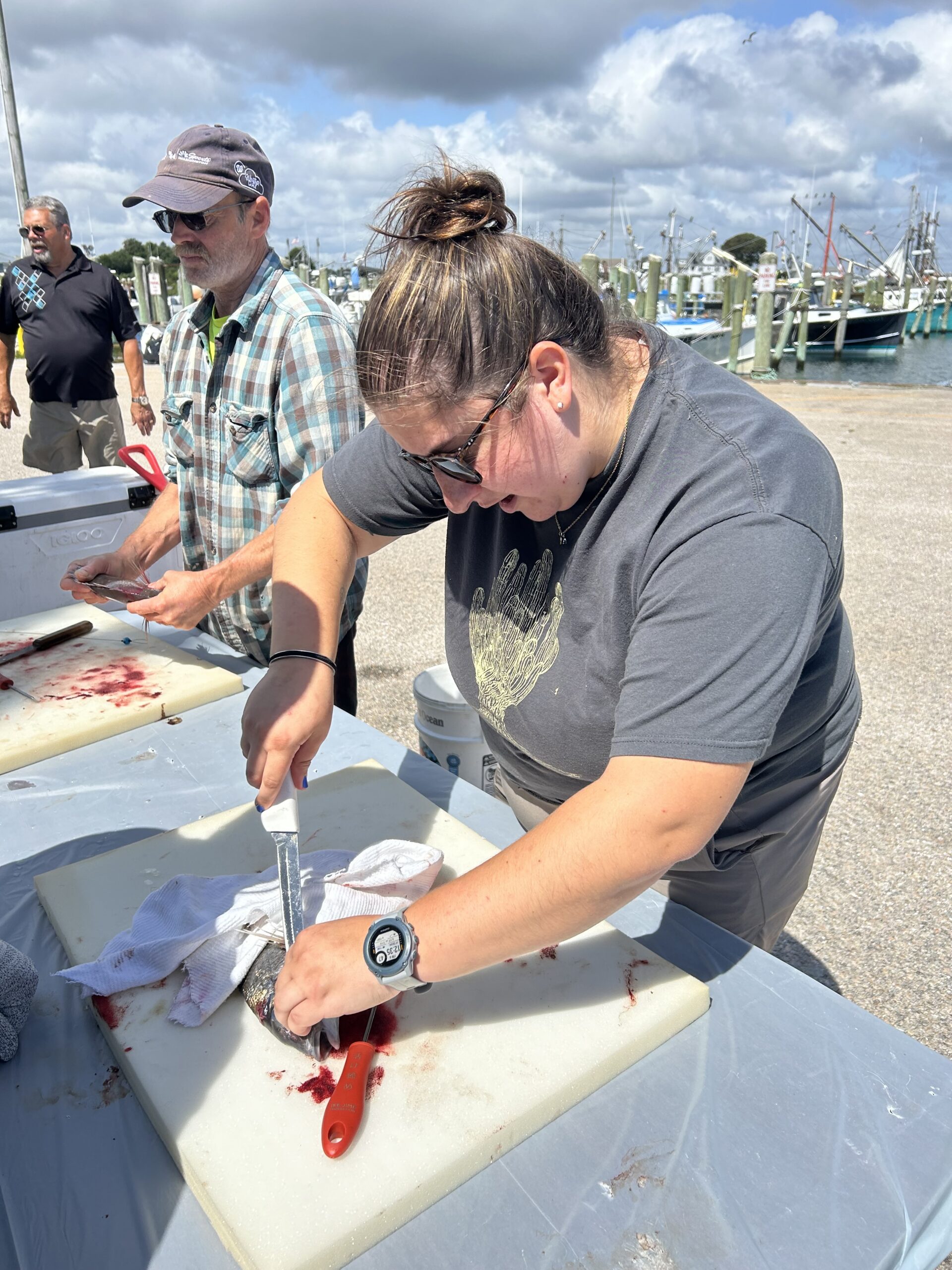
“Can I get people to purchase a product only by sharing information that it’s good for them,” she said, “rather than relying on that taste test?”
The results surprised her.
Pauls expected consumers would be most persuaded by the personal benefits, such as fresher, better-tasting seafood. Instead, her research found that people responded most positively when they learned about both the personal benefits and the environmental benefits at the same time
“People need to know that it’s good for them and good for the environment,” she said.
Those findings give her hope that consumers may be more willing than expected to support seafood products that benefit both people and the environment.
That belief extends beyond environmental sustainability. Aida also wants consumers to understand the human stories behind the seafood they buy.
Her second project examines forced labor within the global seafood industry. Many consumers are unaware that some seafood products sold around the world may be linked to exploitative labor practices. Aida’s research asks whether consumers would be willing to pay more for seafood certified as being free from forced labor and whether greater awareness could encourage more ethical supply chains.
“I think it’s a very under-talked-about topic,” she said. “I didn’t even know about it until a few years ago, and it was very eye-opening.”
Unlike her ikejime research, which has already produced early findings, this portion of Aida’s research is still underway. She is now preparing for the next phase of the project, which will examine how consumers respond to information about forced labor and an ethical seafood label. As the research progresses, she hopes to better understand what information consumers need to make more informed purchasing decisions. For Aida, the research is ultimately about giving people better options.
“I like to believe people truly, at their core, are empathetic, good people,” she said. “If we give people the opportunity to do better, I think they’re going to.”
Aida is preparing to launch the next phase of her research while also sharing early findings from her ikejime project with the international fisheries community. This summer, she presented her research at the International Institute of Fisheries Economics & Trade conference in the Faroe Islands.
It all comes down to the power of consumer choice.
“As consumers, we have the power to ask for better alternatives. We have the power to support better alternatives, and we really can get what we want. It might take time, but I think we can all eat better seafood.”
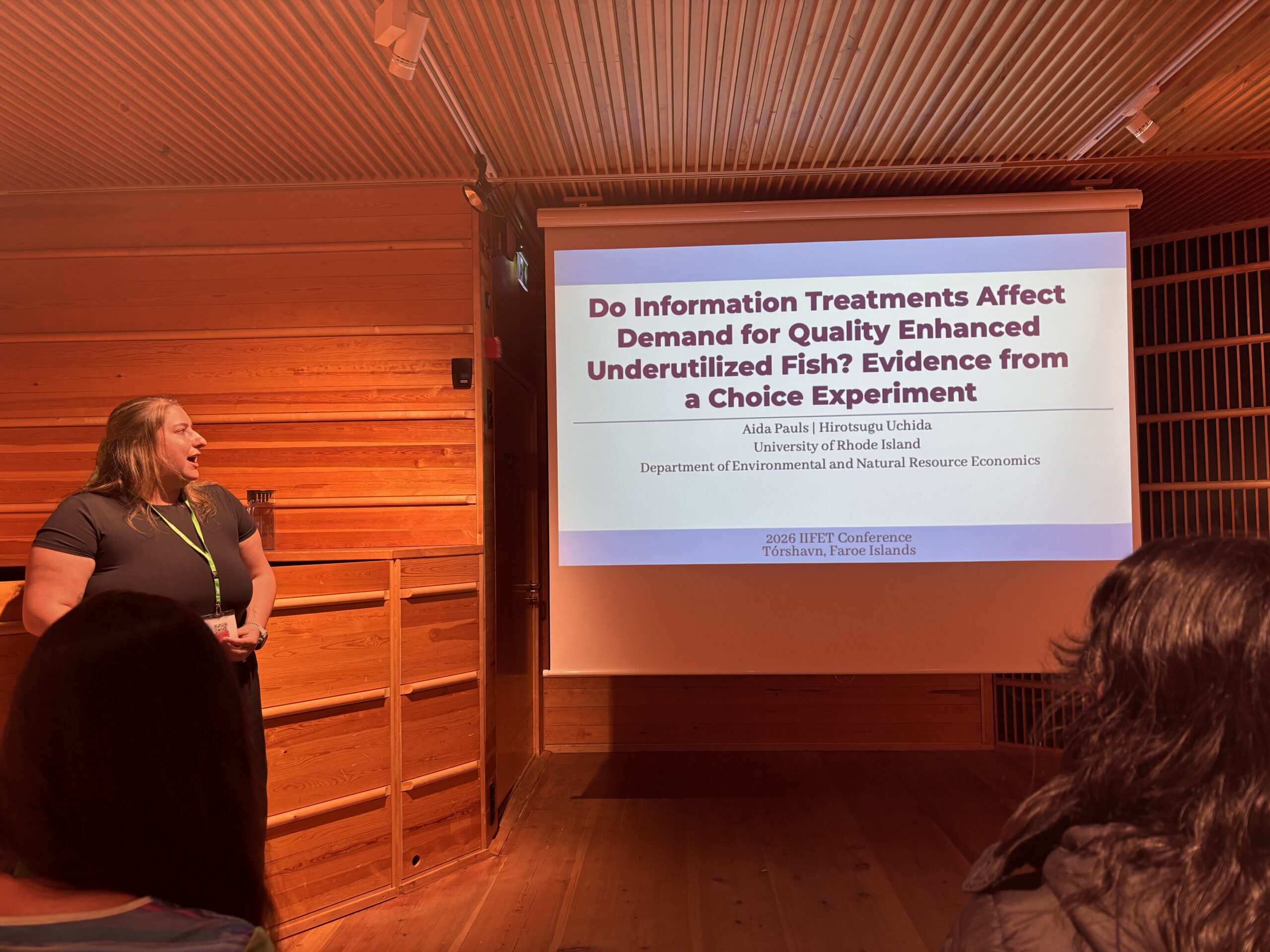
Aida Pauls presents her research on ikejime and consumer demand for quality-enhanced underutilized fish at the 2026 International Institute of Fisheries Economics & Trade Conference in Tórshavn, Faroe Islands.
Photo courtesy of Aida Pauls.
Want to learn more? Explore the fellowships.
The fellowship supports graduate students conducting research focused on marine resource economics. At the University of Rhode Island, Pauls is advised by Professor Hirotsugu Uchida, while her NOAA faculty advisor is Kristy Wallmo. Together, her advisors provide guidance from both the academic and federal sides of her research, helping her connect economic research with the needs of fisheries management and policy.
– Isabella Carmichael, Rhode Island Sea Grant