
The birds gathering at the Kickemuit River are helping tell the story of an estuary coming back to life.
On October 10, community members visited the restored estuary in Warren with birding expert and photographer Butch Lombardi. As participants watched birds move across the water and exposed mudflats, Lombardi explained how the river’s changing habitat is attracting a new variety of wildlife.
For much of the past century, dams restricted the Kickemuit River’s natural flow and transformed part of the tidal river into freshwater reservoirs. Over time, the trapped water sometimes stagnated, leading to algae growth and other water-quality problems.
The removal of the lower and upper dams allowed tidal water to return to the area. The restoration is helping the river move closer to its natural condition while improving water quality, reducing flooding, and creating habitat for fish and wildlife.
From Mudflat to Habitat
Not everyone welcomed the estuary’s new appearance at first. Lombardi said some residents focused on the exposed mud and felt the area looked unattractive after the dams were removed. However, people are beginning to see the site differently as vegetation returns and more wildlife uses the restored habitat.
“It was just mud, and it was deep mud,” Lombardi said. “But if you look at it now, you can see vestiges of green growing in different places.”
The landscape will not recover overnight. Salt-tolerant plants are only beginning to grow in areas that were recently covered by reservoir water. As those plants spread, they will help form salt marsh habitat that can support insects, fish, birds and other wildlife.
“If you give it time, it’s going to look like any other saltwater river. It’s going to create marshes,” Lombardi told the group.
The return of tidal water is already changing the birds observed at the site. Freshwater ducks were once common around the former reservoir. Now, shorebirds such as sandpipers are using the exposed mudflats to rest and search for food during migration.
“This seems to be becoming a fairly popular stop for migrating waterfowl,” Lombardi said.
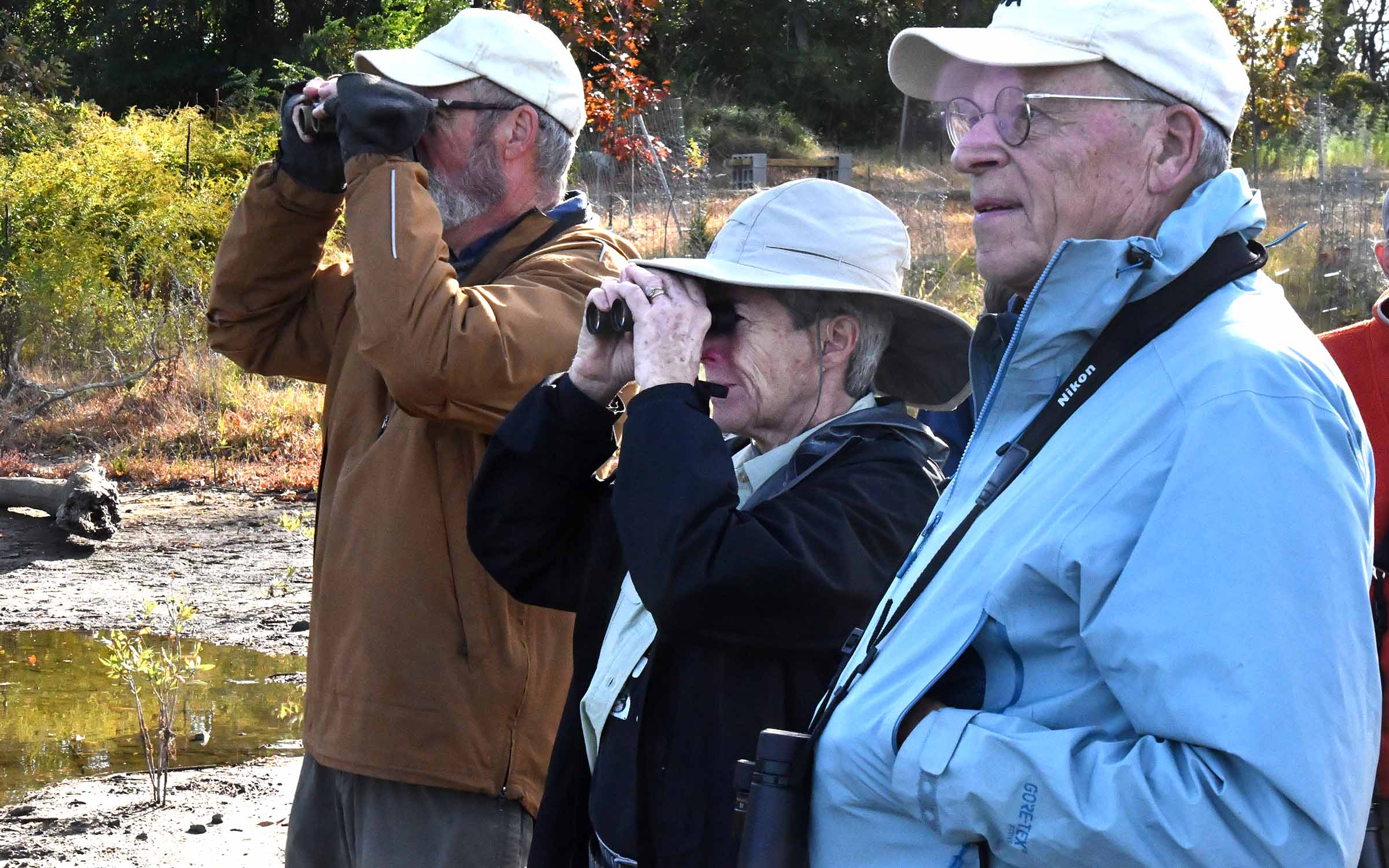
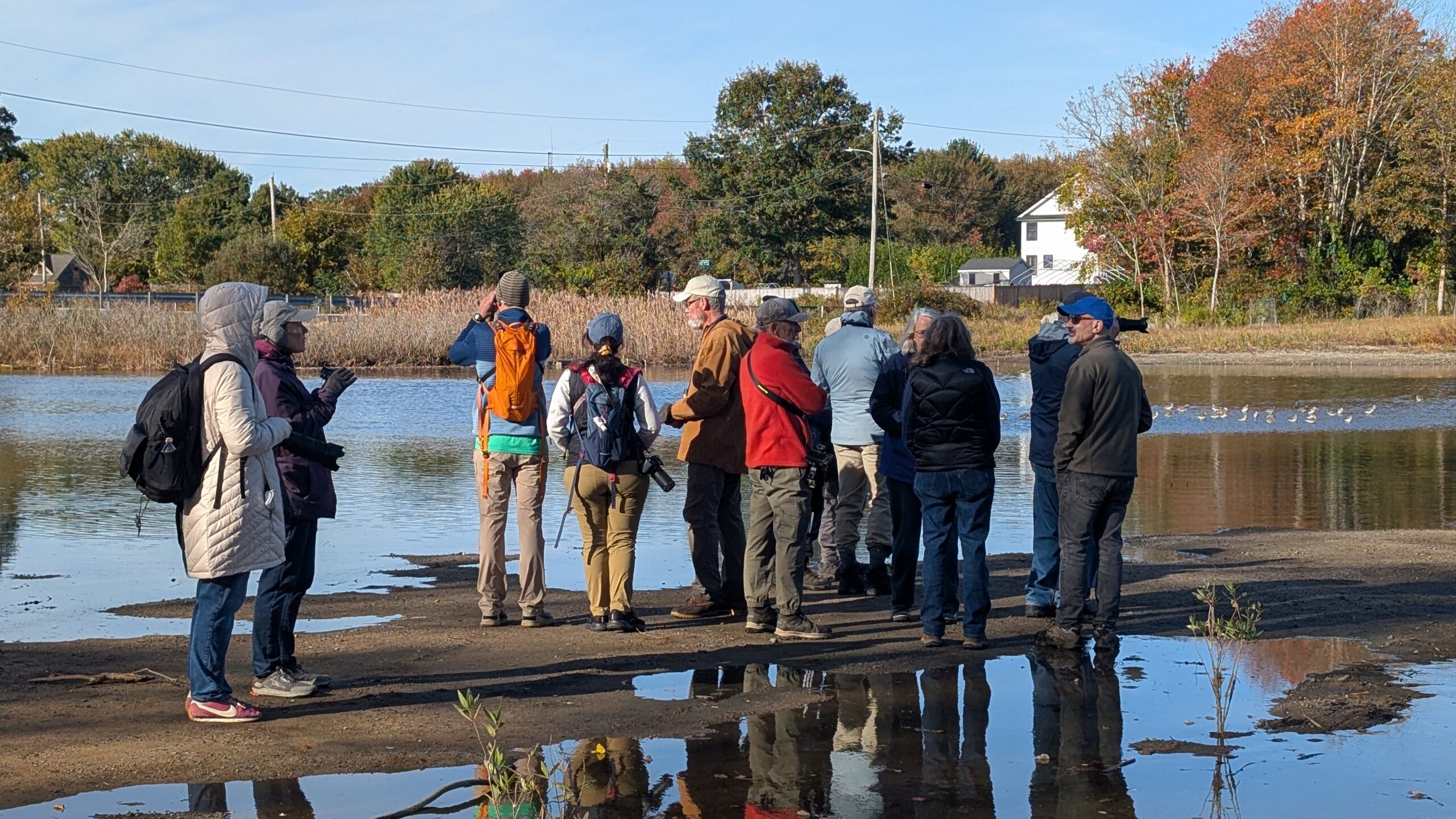
Bird walk participants use binoculars to scan the restored Kickemuit River Estuary for shorebirds, migrating waterfowl, and bald eagles. Photos by Trevor Kelly.
Migrating birds depend on places like the Kickemuit Estuary to rest and feed during their long journeys. Even a small restored habitat can become an important stop along the Atlantic Flyway, the migration route followed by millions of birds each year.
Bald Eagles Return
Lombardi also discussed the growing presence of bald eagles and ospreys throughout the East Bay. Although their wider recovery is connected to decades of conservation efforts, including the ban on the pesticide DDT, healthy rivers and estuaries provide valuable places for these birds to find food.
Lombardi, a lifelong Warren resident, recalled rarely seeing bald eagles while growing up along the Palmer River. Today, eagles are observed much more regularly around the East Bay, including near the Kickemuit River. He said he hopes a pair may eventually establish a successful nest in the area, and emphasized the importance of giving nesting birds plenty of space.
“There were a pair of eagles that started to build a nest on the Kickemuit and actually had it all built,” Lombardi said. “And then somebody, thinking they were doing a good thing, flew a drone up over it, and they left.”
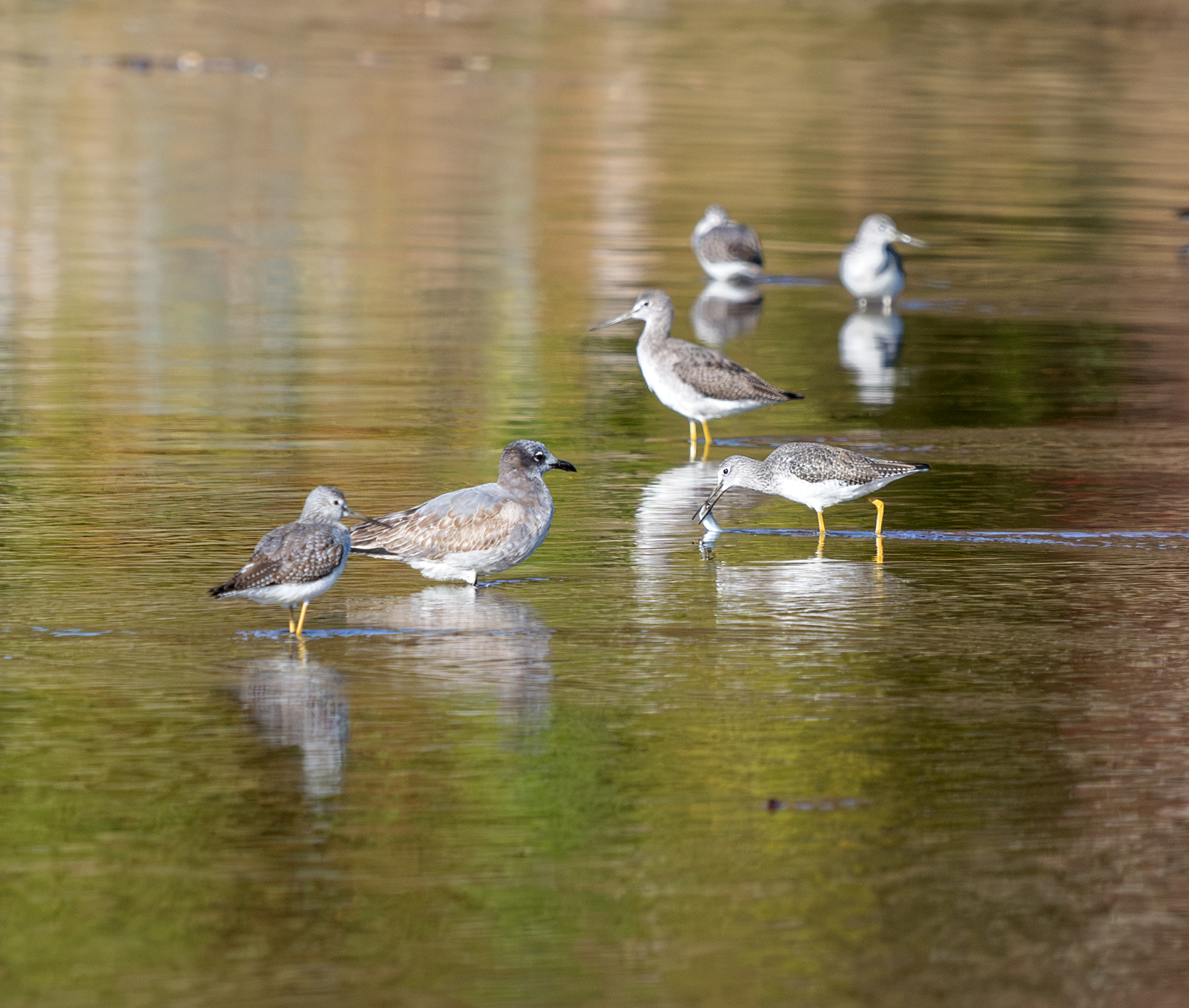
A sandpiper catches a fish in the Kickemuit.
Photo by Monica Allard Cox
Encouraging Signs
During the walk, participants learned where and when to look for local birds and how to use the Merlin Bird ID app to recognize birds by their songs and calls.
The gathering offered a close look at how restoring the natural movement of water can reshape an ecosystem. As the salt marsh continues to grow, the birds arriving at the Kickemuit River provide an early sign of the habitat’s recovery.
The bird walk was hosted by the Warren Conservation Commission, Warren HEZ and Rhode Island Sea Grant.
Interested in seeing more photos?
– Isabella Carmichael, Rhode Island Sea Grant