Whether you’re interested in digging quahogs along the shoreline or simply curious about the shellfish that live in Rhode Island’s coastal waters, recreational shellfishing offers a unique way to experience the Ocean State’s marine environment. Rhode Island residents can recreationally harvest shellfish for their own consumption without a license, as long as they follow current regulations, including daily harvest limits and approved harvest areas.
“Shellfish are part of the Rhode Island way of life and have been for centuries,” Azure Cygler says in a Rhode Island Sea Grant video on recreational shellfishing. Watch Here >>
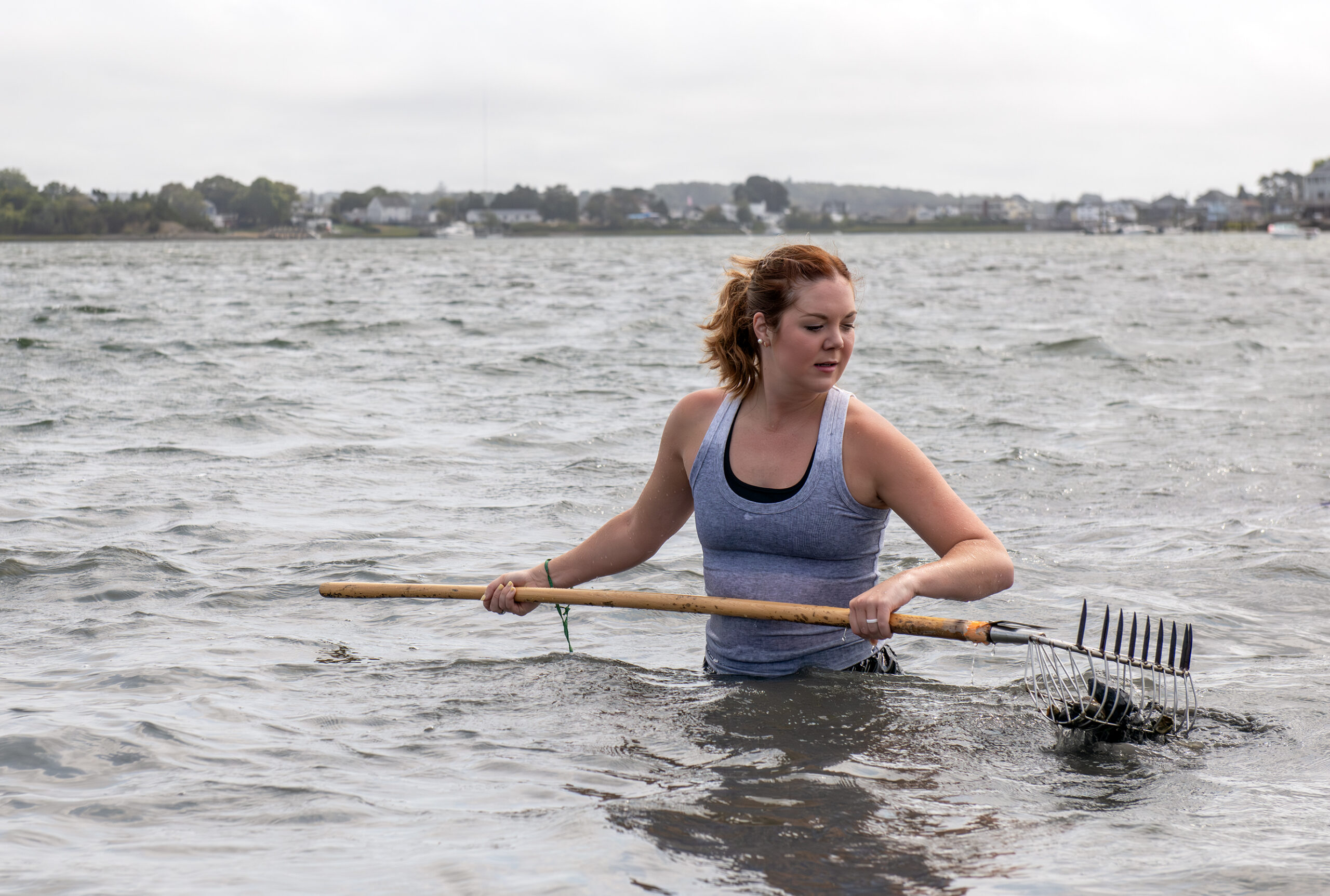
Rhode Island Sea Grant’s Abbey Greene digs for quahogs at a clamming class. Rhode Islanders do not need a license to recreationally harvest shellfish in state waters, but do need to follow RIDEM regulations.
Harvesting Responsibly
Shellfish in Rhode Island
Rhode Island’s waters are home to a variety of shellfish species, including the northern quahog—Rhode Island’s official state shellfish—as well as oysters, blue mussels, bay scallops, soft-shell clams (steamers), razor clams, whelks, and periwinkles.
Shellfish are more than a source of food, they are an important part of healthy coastal ecosystems. Many shellfish are filter feeders that remove algae and other particles from the water as they feed, helping improve water quality. Shellfish reefs also create habitat for fish, crabs, and other marine life, making them valuable contributors to Rhode Island’s coastal environment.
Recreational shellfishing is a longstanding Rhode Island tradition, but harvesting responsibly helps protect both public health and shellfish populations for future generations. Before heading out, it’s important to check that your chosen harvest area is open, as water quality conditions and temporary closures can change throughout the year. Harvesters should also follow current Rhode Island Department of Environmental Management regulations, including size requirements, harvest seasons, and possession limits, and use a clam gauge to ensure shellfish meet the legal minimum size.
If you’re interested in trying recreational shellfishing for the first time, RIDEM’s Come Clam With Me program has historically introduced participants to several beginner-friendly locations around the state, including Rocky Point in Warwick, Gull Cove in Portsmouth, and North Kingstown Town Beach. If classes are not your thing, Rhode Island Sea Grant’s Shellfish Shorts video series provides a helpful introduction to harvesting responsibly, preparing shellfish, and understanding the science behind shellfish safety.
As with any harvest location, it’s important to check current regulations and water quality conditions before visiting. Check RI DEM’s website for the most current information.
Explore Rhode Island Sea Grant resources on recreational shellfishing, shellfish species, and local oyster aquaculture.
Shellfishing in Rhode Island: Recreational Harvester's Guide (PDF)
Oyster Farming Off Rome Point: What You Should Know (PDF)
Oyster Farming off of Ninigret Pond: What You Should Know (PDF)
Shellfish Videos and More!
—Isabella Carmichael, Rhode Island Sea Grant Communications Intern