
As erosion gradually moves Rhode Island’s shoreline inland, the debate over who can, and cannot, hold back the sea is becoming increasingly important. Seawalls and other hardened shoreline structures may protect private property from erosion, but studies suggest they can also contribute to beach loss, habitat degradation, and reduced public shoreline access.
A new report from the Rhode Island Sea Grant Legal Program and Marine Affairs Institute at Roger Williams University School of Law, Takings Considerations for Rhode Island’s Structural Shoreline Hardening Prohibition in Type 1 Waters, researched and drafted by Rhode Island Sea Grant Law Fellow Naomi Zhang, examines the legal implications of Rhode Island’s restrictions on structural shoreline hardening in Type 1 Conservation Areas (also referred to as Type 1 waters).
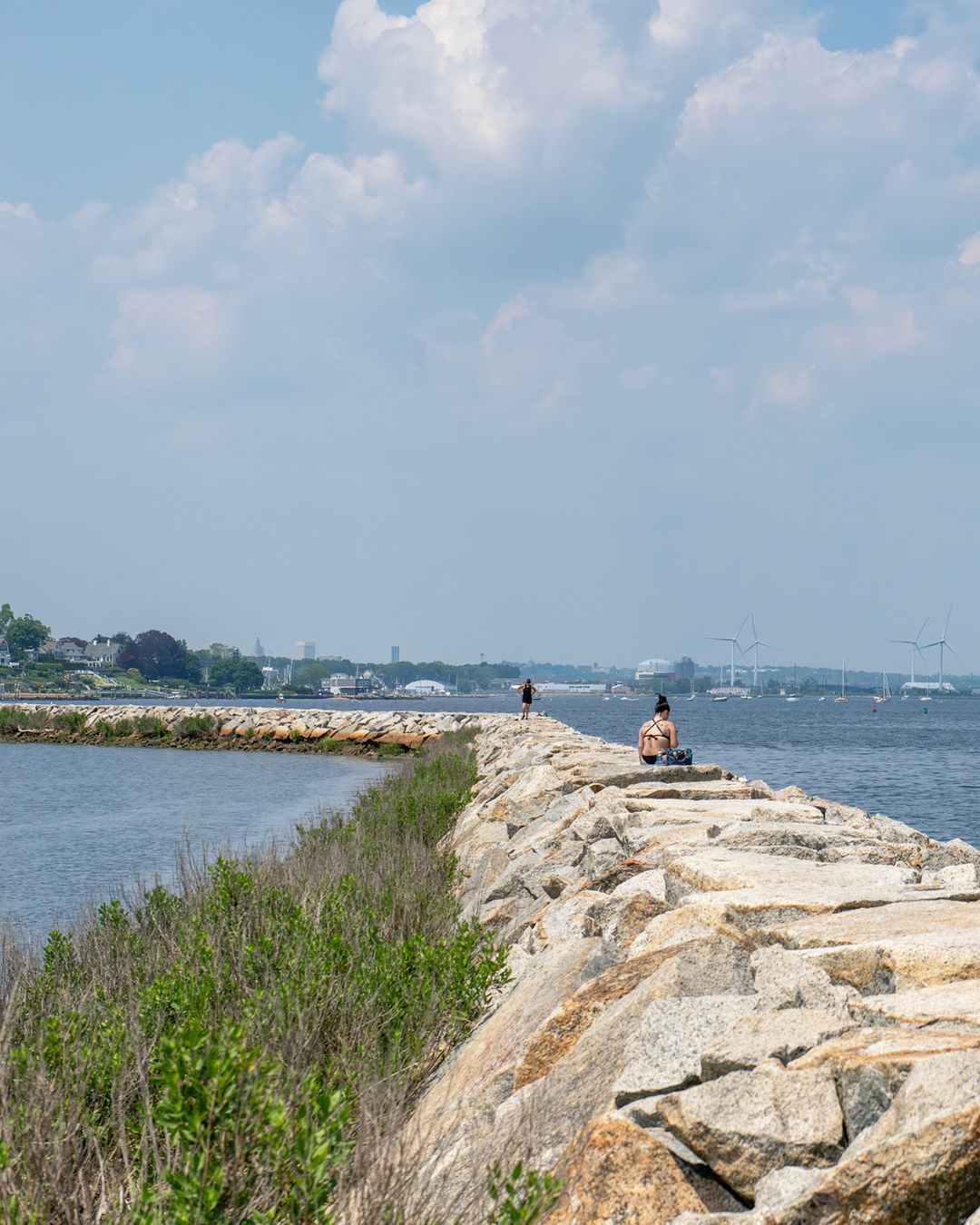
The breakwater at Salter Grove park in Warwick.
Photo by Monica Allard Cox
Structural shoreline hardening includes seawalls, bulkheads, revetments, and riprap that are used to reduce erosion and stabilize shorelines. However, the report explains that “beach narrowing and loss are more likely to occur at armored beaches than at non-armored beaches.”
In Rhode Island, these impacts are particularly significant because sediment from the state’s eroding glacial bluffs helps sustain many of its beaches and coastal systems.
To address these environmental concerns, the Rhode Island Coastal Resources Management Council (CRMC) prohibits structural shoreline hardening in Type 1 Conservation Areas, which are designated to preserve natural habitats, scenic values, water quality, and natural shoreline types. The report examines whether these restrictions could constitute an unconstitutional taking of private property under federal and state law.
After analyzing constitutional takings law, Rhode Island’s police powers, nuisance doctrines, and legal principles governing shoreline change, the report concludes that courts would likely consider multiple factors when evaluating such claims. Existing laws in Rhode Island and other states suggest that “shoreline property owners generally do not have an automatic right to prevent erosion on their properties.”
The report also notes a fundamental reality of coastal change: “the fact remains that along an eroding coast, the position of the shoreline will continue to migrate.”
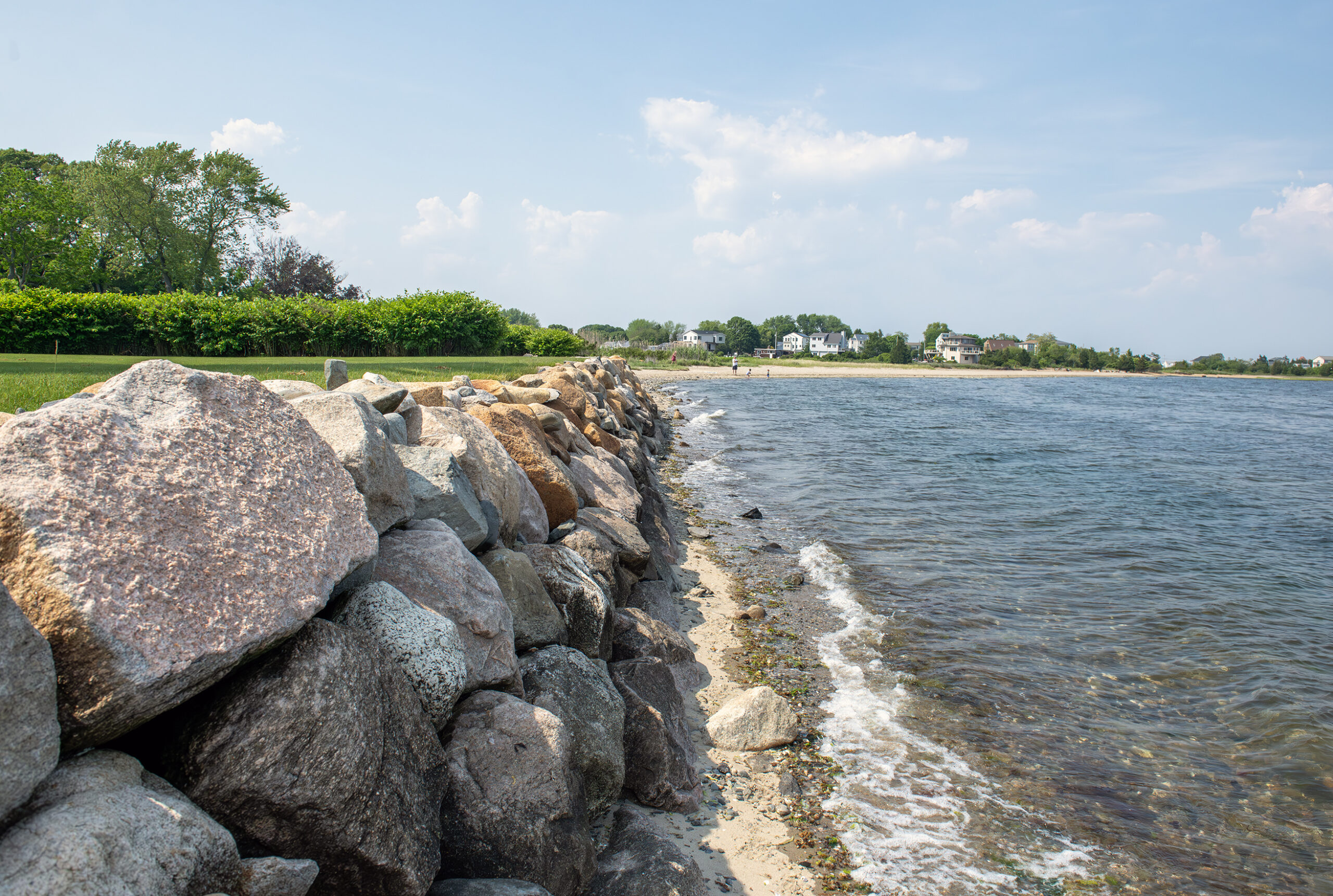
This seawall lines the shore near Lippitt Park in Warwick.
Photo by Monica Allard Cox
As Rhode Island’s coasts continue to change, the report highlights the complex balance between private property interests, environmental protection, and public access to the shore.
Interested in reading the report?
Click the link below to read Takings Considerations for Rhode Island’s Structural Shoreline Hardening Prohibition in Type 1 Waters by Rhode Island Sea Grant Law Fellow Naomi Zhang.
– Isabella Carmichael, Rhode Island Sea Grant