
What happens when you remove dams that have impounded a river for 140 years? Water quality improves, as expected, but some surprises are still being revealed two years later at the Kickemuit River in Warren.
“It wasn’t unheard of to see the large algal blooms in the upper and the lower Kickemuit,” said Wenley Ferguson, restoration director for Save The Bay, adding that in addition to bacteria, “it has some of the highest nutrient levels in the state.”
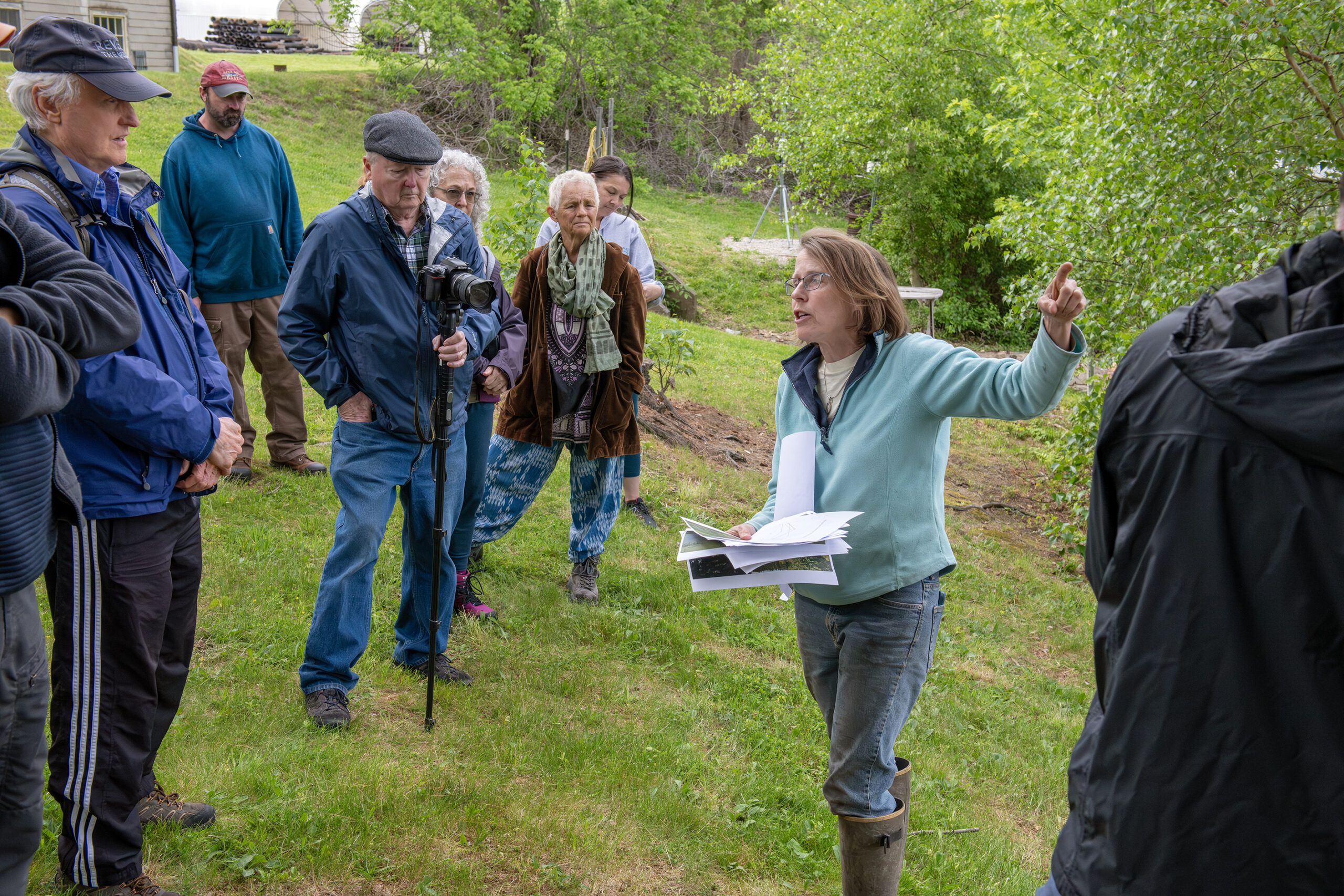
Wenley Ferguson leads a tour of the restoration of the Kickemuit River where two dams have been removed. The event was sponsored by the Warren Conservation Commission, the Warren HEZ, the Bristol County Water Authority (BCWA), which owns the area, Save The Bay, and Rhode Island Sea Grant.
Ferguson was speaking at a walking tour of the former dammed areas of the river in May.
Several years ago, the Rhode Island Department of Transportation was planning to elevate Schoolhouse Road, adjacent to the lower dam, due to flooding issues. A partnership of state, local, and environmental interests proposed removing the upper and lower dams to alleviate the flooding as well as improve water quality and habitat.
Grants and other funding covered most of the approximately $4 million cost of the project, largely sparing BCWA ratepayers.
This part of the river is tidal, so partners expected that the salt marsh vegetation would come back. Instead, what’s been seen has been a mudflat that is largely exposed at low tide.
“There’s a lot of unknown about what happens when you remove a dam,” Ferguson said.
However, she said, the slow revegetation wasn’t a complete surprise because the marsh had been impounded for well over a century.
“Marshes aren’t supposed to be flooded all the time,” Ferguson said, “because the vegetation dies off, and without the roots and all that below-ground organic matter to build the marsh elevation, the marsh basically sinks, and so what we have here is 140 years of marsh subsidence or sinking, and that’s why we’re not seeing the salt marsh grasses coming back.”
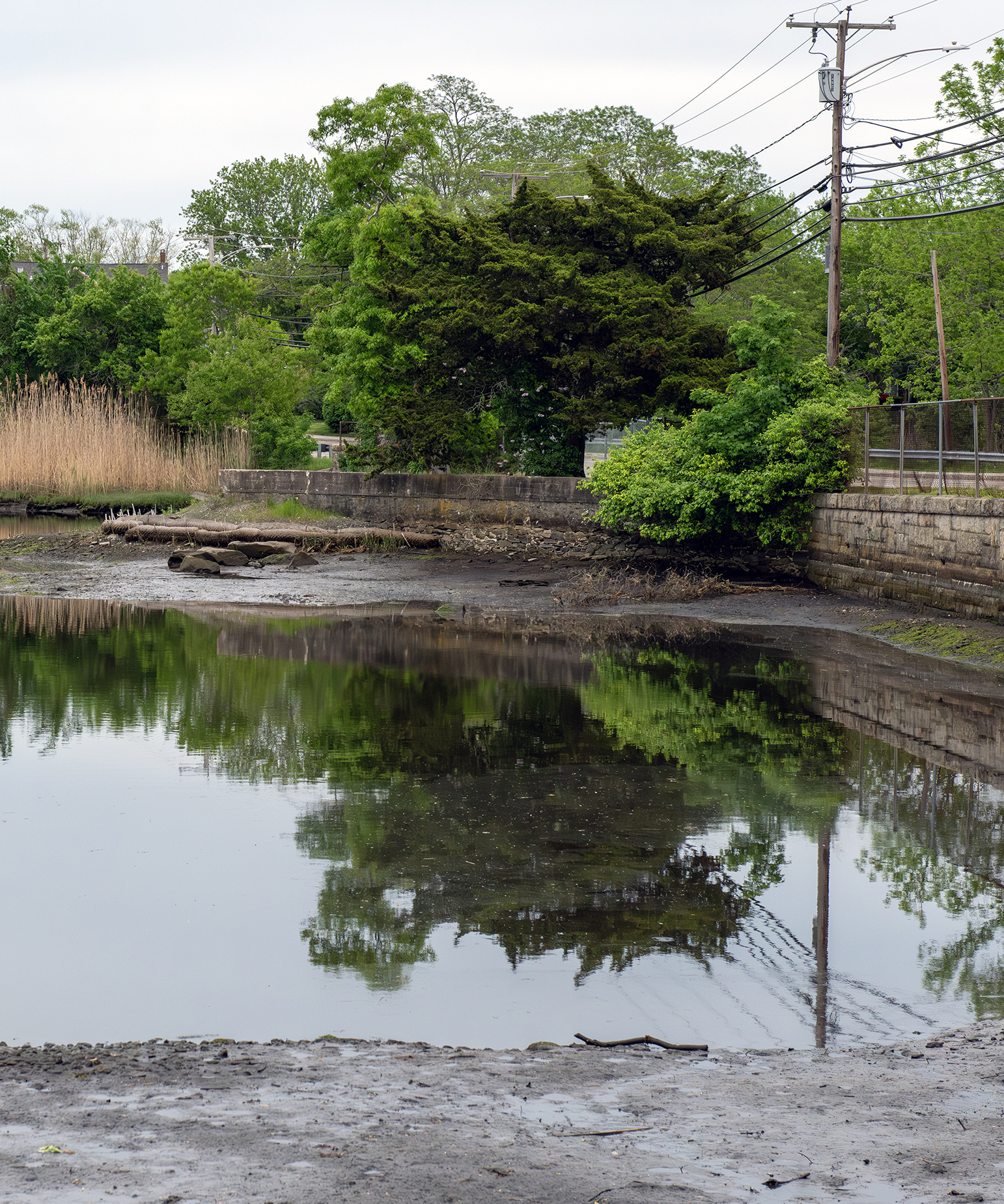
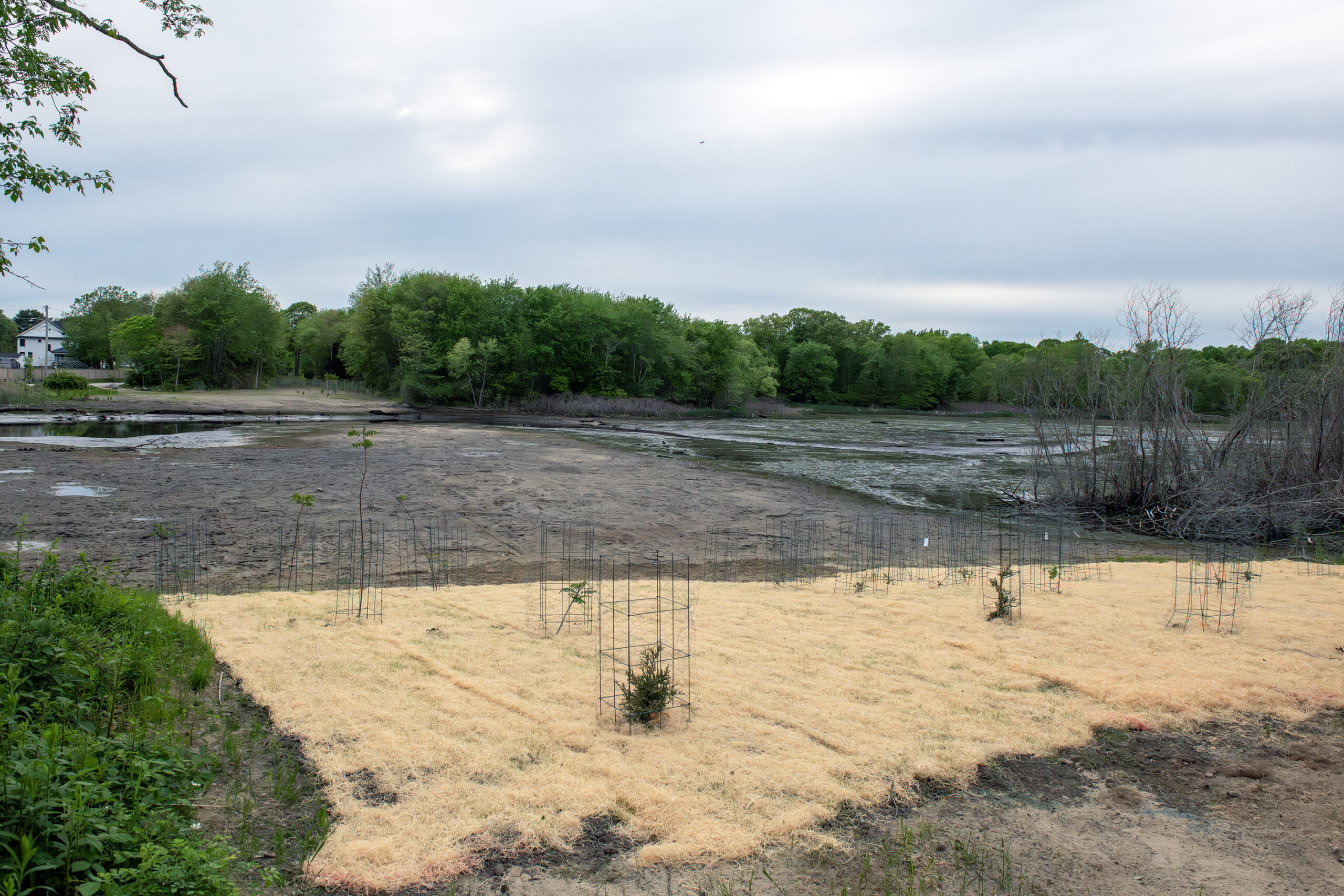
Project partners are nudging salt marsh restoration along thanks to funding that has allowed them to remove some contaminated sediments and undertake grading and planting projects, including one this June that Ferguson invited walk attendees to participate in.
Post-removal monitoring has shown significant improvements in water clarity, increased dissolved oxygen, and reduced frequency and duration of bacterial spikes after rainfall. The site has also become a hotspot for birdwatching, with increased sightings of shorebirds, ospreys, and even bald eagles, said Keith Morton of the Warren Conservation Commission.
We’re learning more and more about what’s coming back,” Ferguson said. What they’re learning, she added, will inform future dam projects.
The Warren Habitat Restoration Tour was sponsored by the Warren Conservation Commission, the Warren HEZ, the Bristol County Water Authority, Save The Bay, and Rhode Island Sea Grant. To receive information about future walks and other events, email Monica Allard Cox at allard@uri.edu.