A report from the Marine Affairs Institute at Roger Williams University School of Law and the Rhode Island Sea Grant Legal Program examines how Maine balances state and local authority in managing shellfish resources and aquaculture activities along its coast.
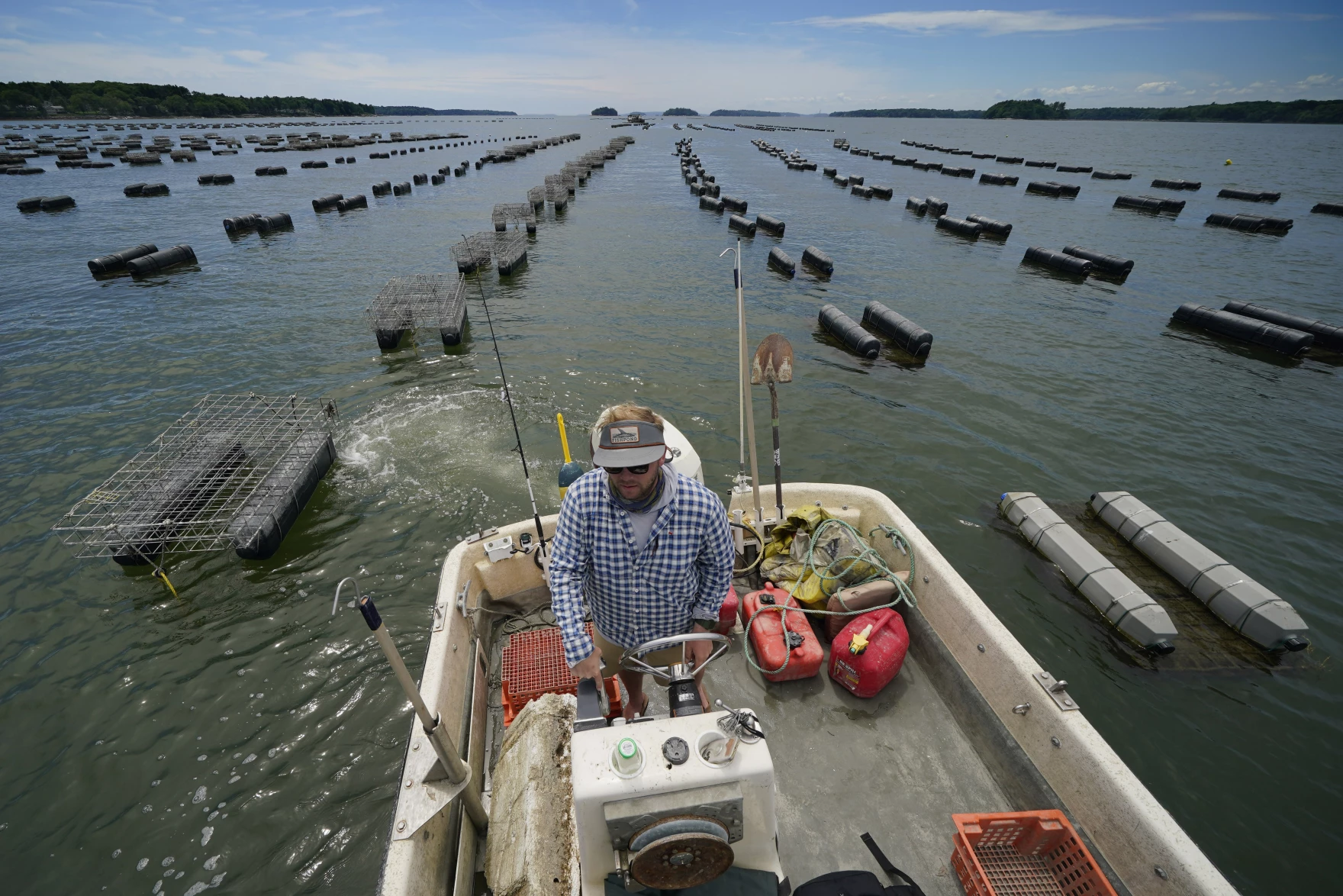
A report from the Marine Affairs Institute at Roger Williams University School of Law and the Rhode Island Sea Grant Legal Program examines how Maine’s shellfish management system depends on shifting coastal boundaries and how sea -level rise may complicate them in the future.
Maine manages shellfish resources through a unique co-management system that shares responsibility between coastal municipalities and the state. Local governments can establish shellfish conservation programs, regulate harvests, issue licenses, and manage shellfish resources within their intertidal zones, while the Maine Department of Marine Resources maintains broader authority over marine resources and aquaculture activities.
The arrangement is closely tied to Maine’s public trust doctrine, which protects the public’s right to fish, fowl, and navigate in intertidal areas even though much of that land is privately owned. Municipal shellfish management programs help ensure those rights can continue while supporting both commercial and recreational shellfishing.
Authored by Rhode Island Sea Grant Law Fellow Maria Ortiz, Maine’s Intertidal and Subtidal Zones: Legal Distinctions for Shellfish and Aquaculture Management explores how municipalities and state agencies share responsibility for managing shellfish and aquaculture resources. The report examines municipal shellfish conservation programs, aquaculture permitting, enforcement authority, and the legal definitions that determine where municipal jurisdiction ends and state authority begins.
The report also compares Maine’s shellfish management framework with neighboring Massachusetts, illustrating how states can take different approaches to balancing local and state authority over coastal resources. While both states grant municipalities a role in shellfish management and protect public rights in tidal waters, Massachusetts gives local governments broader authority extending beyond the intertidal zone, while Maine’s municipal jurisdiction generally ends at the extreme low-water line.
The comparison highlights the variety of governance approaches used by coastal states and the complexity of defining management authority in dynamic coastal environments. In Maine, for example, multiple legal definitions of intertidal areas exist depending on the management context, and local shellfish wardens often rely on GPS coordinates, buoys, and tidal observations to identify jurisdictional boundaries in the field.
Looking ahead, sea level rise may further complicate those lines. As high- and low-water marks move inland, the boundaries that define municipal and state management authority will move as well. Areas that are currently mudflats or shellfish habitats may change over time, potentially altering management responsibilities, regulatory authority, and public access rights.
While focused on Maine, the report highlights broader questions facing coastal communities throughout the Northeast as rising seas reshape shorelines, habitats, and the legal frameworks used to manage them. As coastal boundaries shift, states and municipalities may face new challenges in defining management authority, protecting public access rights, and adapting long-standing governance systems to a changing shoreline.
By examining legal frameworks across state lines, Rhode Island Sea Grant Law Fellows help coastal managers, policymakers, and communities better understand how different governance approaches address shared challenges throughout the region.
The Rhode Island Sea Grant Law Fellow Program is an experiential education opportunity in which law fellows research and analyze marine law issues requested by outside professional organizations under the supervision of an attorney with the Rhode Island Sea Grant Legal Program, located at the Marine Affairs Institute at Roger Williams University School of Law.
–Meredith Haas, Rhode Island Sea Grant