Revolution Wind tour brings Rhode Island leaders, researchers, and students together to explore offshore energy and ocean use.
A recent tour of the Revolution Wind Farm brought together a number of Rhode Island community leaders with researchers and other experts who are studying energy issues. Participants got an up-close look at these massive structures about which so much is still to be learned.
Revolution Wind is the nation’s first multistate offshore wind project, with 65 turbines located about 15 miles south of Rhode Island. It is adjacent to South Fork Wind, which has an additional 12 turbines. Once fully operational later this year, the 704-megawatt Revolution Wind project is expected to generate enough electricity annually to power more than 350,000 homes and businesses across Rhode Island and Connecticut.
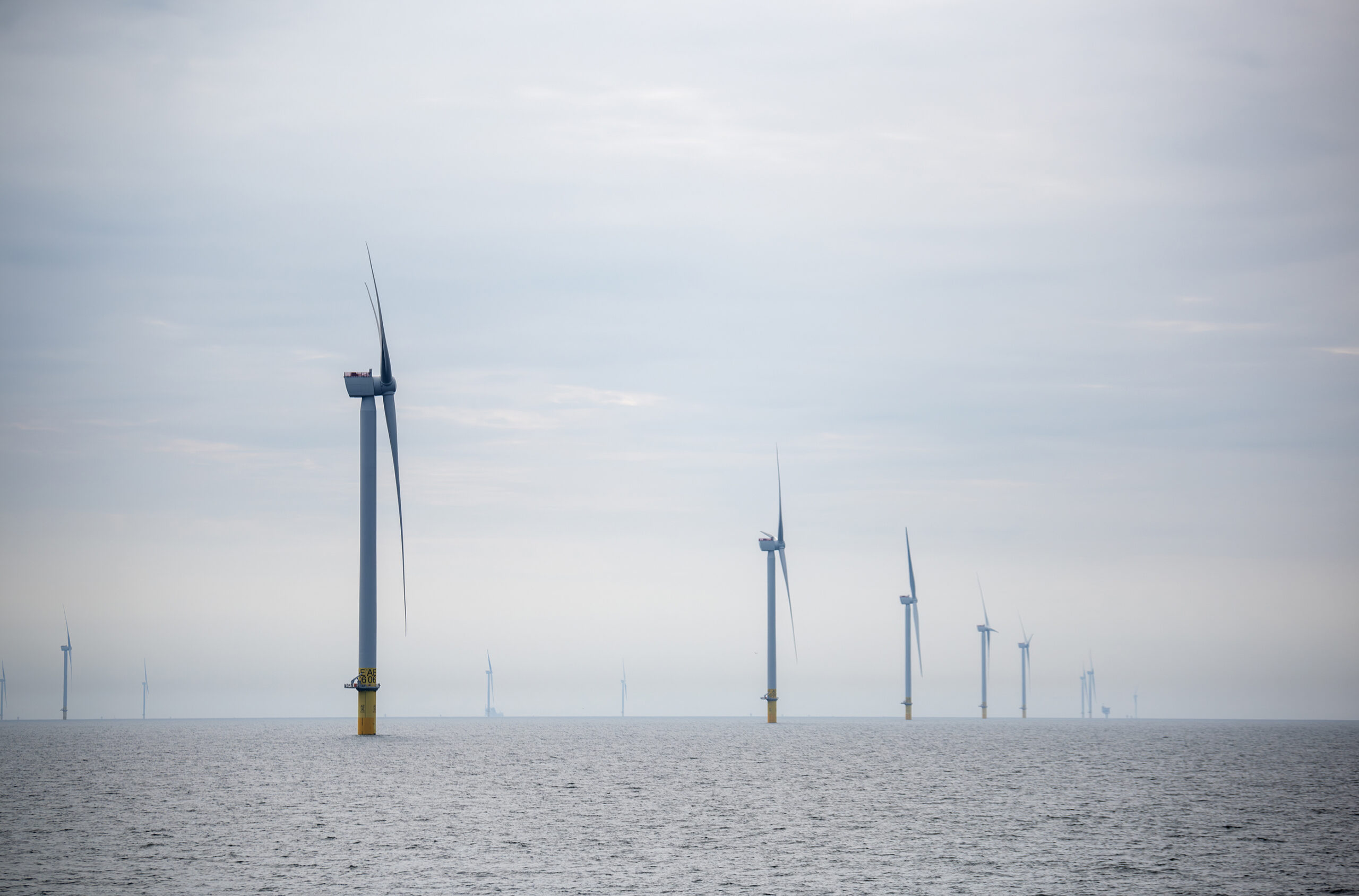
Offshore wind turbines line the horizon, underscoring the growing presence of renewable energy in coastal waters and the need to understand their potential impacts on marine ecosystems and fisheries.
The 135 participants in the tour, which was sponsored by Rhode Island Sea Grant and the National Wildlife Federation, included URI faculty, staff, and students, as well as state senators and representatives, members of nonprofit organizations, fisheries and energy experts, and state and local officials.
Coastal communities increasingly grapple with energy resource issues, and the tour allowed attendees to discuss the opportunities and challenges posed by offshore wind from advancing climate goals to concerns about the effects of these developments on marine mammals, habitat, and fisheries. Participants also learned about ongoing studies looking at species numbers, composition, and health in the area of the turbines as well as the quality of the artificial reef habitat provided by these offshore structures.
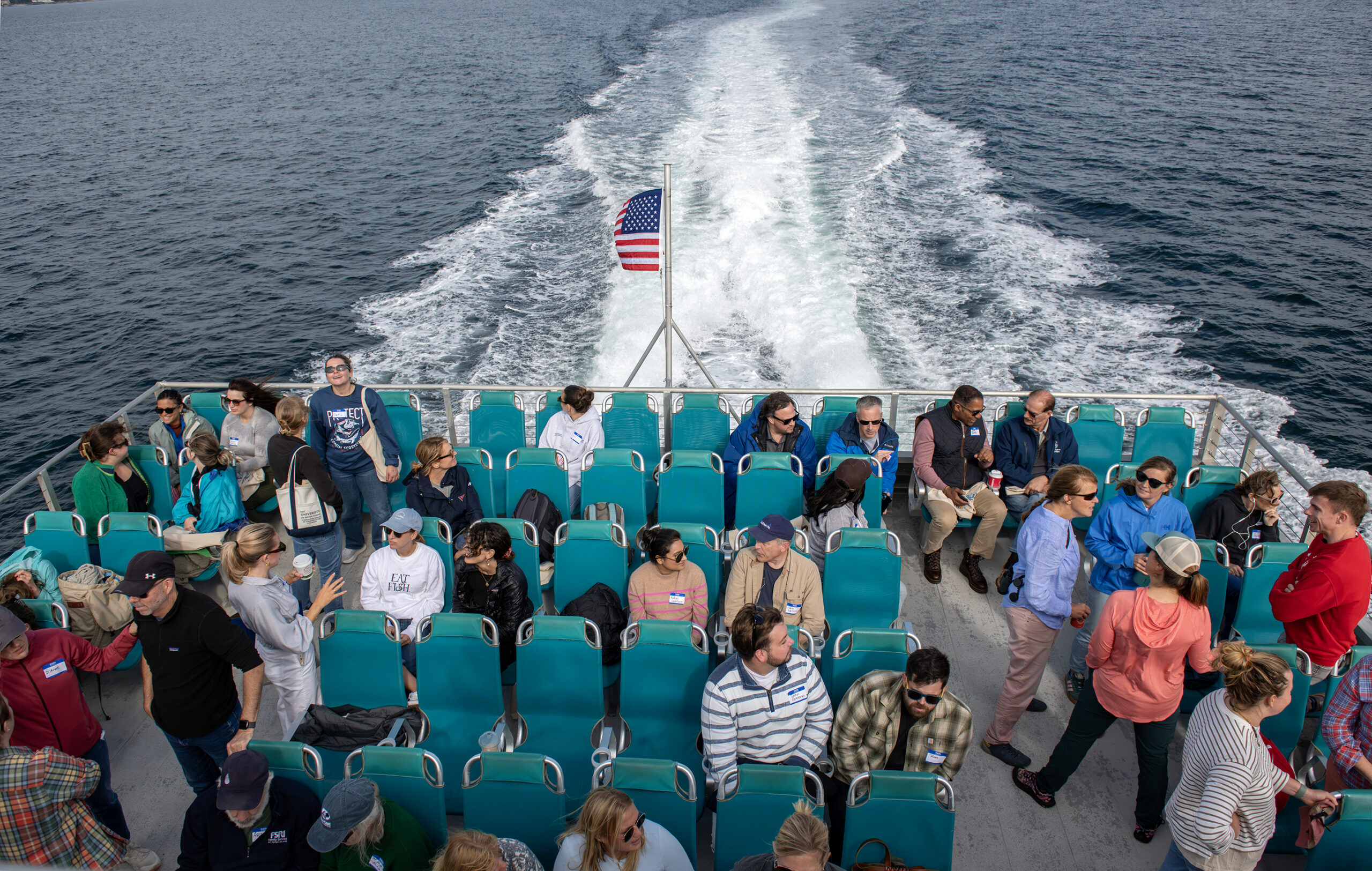
“Being able to see the wind turbines up close and with a group of people who represent many walks of life, and many perspectives on ocean use, is incredibly useful for thinking about not just energy issues, but ocean use and activity issues writ large,” said Susanne Menden-Deuer, URI oceanographer and professor. “Several of my students were able to join and I think it provided a valuable field opportunity for them.”
As a more comprehensive understanding of the impacts of offshore wind development emerges, Rhode Island Sea Grant and the National Sea Grant Energy Liaison will continue to work to ensure Sea Grant constituents, including commercial and recreational fishermen, coastal communities, energy developers, tribal governments, and state and local decision-makers, have timely access to the scientific research and technical expertise needed to support responsible energy growth.
Interested in learn more?
Discover how offshore wind development affects marine habitats and fisheries through Commercial Fisheries Research Foundation research on benthic communities, habitat mapping, and environmental monitoring.